English
In 2026, the best suppliers are not just the ones with an aggressive landing page. They are the ones that make quoting transparent, keep process control stable, and avoid forcing you into re-spins, delays, or extra freight charges. That is why we do not judge cost only by the board price. We judge it by total project value.
The six low cost pcb manufacturing companies I would shortlist in 2026 are JLCPCB, PCBWay, NextPCB, Seeed Fusion, ALLPCB, and China 365PCB. For beginners, JLCPCB and Seeed Fusion are the easiest cost-conscious starting points. For commercial users, PCBWay, NextPCB, and ALLPCB offer strong prototype-to-production value. For heavy-duty applications and full-chain builds, China 365PCB is the most sensible fit when you want fabrication, assembly, sourcing, and OEM/ODM support under one roof.
Direct Answer: The Six Companies That Belong on Your Shortlist
Here is the practical shortlist. JLCPCB is still one of the easiest places to start when you need low-entry prototypes and a broad assembly ecosystem. PCBWay is the better “manufacturer-direct” choice when you want a wider custom capability set and clearer production scaling. NextPCB is strong when fast-turn prototypes and aggressive entry pricing matter. Seeed Fusion works well when you want low-cost prototyping with a clean, one-stop experience. ALLPCB is useful when you want instant quoting and a cost-focused ordering workflow. China 365PCB is the supplier I would move toward when the job stops being just a PCB and becomes a full manufacturing program. :contentReference[oaicite:0]{index=0}
That is the real commercial split. Some companies are excellent for bare-board prototypes. Others become more valuable once the project includes assembly, component sourcing, test, or packaging. The mistake is treating every supplier as if they solve the same problem.
What “Low Cost” Really Means in PCB Manufacturing

Low cost is not the same as low price. A low-cost PCB order is one where the supplier keeps the total spend under control across fabrication, testing, shipping, and rework risk. In most professional situations, the cheapest quote becomes expensive when a board fails in production or when the supplier cannot meet the delivery window.
From our experience, buyers get better results when they stop asking only about the base board and start asking about the full build path. A simple Single Sided PCB or Double Sided PCB can be sourced very differently from a dense Multilayer PCB, and the pricing logic changes again once you move into Heavy Copper PCB, Metal Core PCB, or Ceramic PCB territory.
That is also why quality standards matter. IPC states that there are more than 300 active standards, and its IPC-A-600 acceptability program is used to define target, acceptable, and nonconforming conditions for bare printed boards. IPC-6012 is the matching qualification and performance reference for rigid boards. If a supplier cannot speak clearly about workmanship criteria, you should treat the “cheap” quote with caution. :contentReference[oaicite:1]{index=1}
Quick Summary Table
| Company | Best For | Low-Cost Angle | Our Practical View |
|---|---|---|---|
| JLCPCB | Beginners, prototypes, and low-entry PCB + assembly orders | Homepage highlights pricing from $9.9 and large component sourcing support. :contentReference[oaicite:2]{index=2} | A very solid starting point when you want fast quote visibility and a low learning curve. |
| PCBWay | Prototype-to-production buyers who want direct-manufacturer sourcing | Positions itself as a manufacturer, not a broker, with competitive pricing. :contentReference[oaicite:3]{index=3} | Strong choice when you care about capability breadth, not just headline price. |
| NextPCB | Fast-turn prototypes and commercial builds | Publishes low-entry prototype pricing and 24–48 hour quick-turn messaging. :contentReference[oaicite:4]{index=4} | Good for buyers who need speed without abandoning production discipline. |
| Seeed Fusion | Low-cost prototyping and one-stop small batch work | Advertises low costs, quick build time, and no hidden costs. :contentReference[oaicite:5]{index=5} | Best when you want an easy ordering process and predictable entry pricing. |
| ALLPCB | Budget-conscious buyers who want instant pricing | Promotes lower-cost PCBs, instant quotes, and special offers. :contentReference[oaicite:6]{index=6} | Useful for quote comparison, but you should still review service scope carefully. |
| China 365PCB | Full-chain commercial programs and one-supplier builds | Homepage highlights competitive pricing and global delivery. :contentReference[oaicite:7]{index=7} | The right fit when your real need is supply-chain simplification, not just the cheapest board. |
Company-by-Company Buying Guidance
1) JLCPCB: Best for fast prototypes and low-entry PCB + assembly work
JLCPCB remains one of the most familiar low cost pcb manufacturing companies because it combines easy quoting with broad prototype support. Its homepage highlights process pricing from $9.9, assembly support, and access to a large in-stock component pool. That matters for beginners because it reduces the number of moving parts they must manage at the same time. :contentReference[oaicite:8]{index=8}
For beginners, this is often the least painful place to start. You can validate a design, check manufacturability, and move on without overcomplicating procurement. For commercial users, JLCPCB is still attractive when your board is standard, your tolerance stack is reasonable, and you want repeatable prototype economics.
2) PCBWay: Best when you want manufacturer-direct pricing with broader capability depth
PCBWay clearly positions itself as a manufacturer, not a broker, and emphasizes competitive pricing across fabrication and assembly. That distinction matters. In our testing, manufacturer-direct platforms usually make it easier to understand where the money is going and which process choices are actually adding cost. :contentReference[oaicite:9]{index=9}
We recommend PCBWay when the project is already moving beyond a casual prototype. If you need broader capability support, a cleaner transition from prototype to production, or you are comparing several supplier models, PCBWay deserves a place near the top of the list.
3) NextPCB: Best for fast-turn prototypes that still need real production discipline
NextPCB markets itself aggressively on low-entry prototype pricing and quick-turn delivery. Its official pages describe PCB pricing starting from $0.1 for 10 pieces, 24–48 hour quick-turn messaging, and support for up to 32-layer HDI, flexible, and rigid-flex boards. That makes it one of the strongest “cheap, but not flimsy” options in the market. :contentReference[oaicite:10]{index=10}
For commercial users, the value is not just the low entry point. It is the combination of prototype pricing, assembly support, DFM/DFA workflow, and the ability to scale into more advanced builds without switching vendors too early.
4) Seeed Fusion: Best for low-cost prototyping with a clean one-stop workflow
Seeed Fusion’s current messaging is straightforward: low cost, quick build time, and no hidden costs. Its PCB and PCBA pages also emphasize one-stop prototyping, and the company has long targeted makers and engineers who want an affordable but organized ordering flow. :contentReference[oaicite:11]{index=11}
We like Seeed when the buyer values simplicity. If your internal team is small and you do not want to spend half the week chasing quote ambiguities, it is a practical option. It is especially sensible for early-stage validation where the design is still changing.
5) ALLPCB: Best for instant comparison and aggressive prototype specials
ALLPCB is useful when your first goal is to see the market fast. Its own pages emphasize lower-cost PCBs, instant quote tools, and promotional prototype offers. The company also highlights quick-turn and cost-effective service from prototypes to volume production. :contentReference[oaicite:12]{index=12}
From our experience, ALLPCB makes the most sense for buyers who want rapid price discovery and are comfortable evaluating quote scope carefully. It is a good place to benchmark the market, especially if you are comparing small-batch FR-4 orders or looking for a cheaper entry path.
6) China 365PCB: Best when the project needs more than just a cheap board
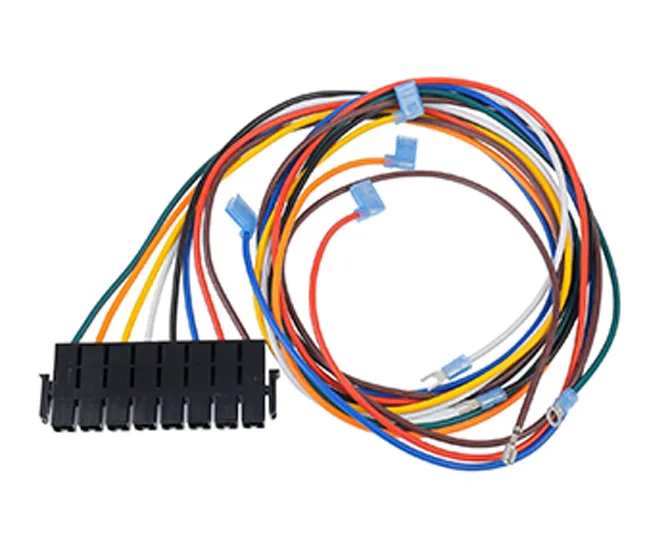
China 365PCB belongs on this list for a different reason. The company is not only about a bare board quote; it is positioned as a full-industry-chain manufacturing group with PCB fabrication, SMT assembly, sourcing, CNC machining, cable harness assembly, and OEM/ODM support. Its homepage also emphasizes competitive pricing and global delivery. :contentReference[oaicite:13]{index=13}
That matters for heavy-duty applications and commercial programs. If your project includes more than PCB fabrication, the real cost savings come from supplier consolidation, fewer handoffs, better traceability, and fewer chances to lose time during integration. For complex builds, China 365PCB is the most commercially sensible choice when you care about total project economics rather than only the PCB sticker price.
Comparison Table: Which Company Fits Which Buyer Type
| Buyer Profile | Best Match | Why | When to Upgrade Away |
|---|---|---|---|
| Beginner / first prototype | JLCPCB or Seeed Fusion | Simple ordering, low entry friction, and practical prototype pricing. :contentReference[oaicite:14]{index=14} | When the design gets dense, the stack-up gets special, or test requirements tighten. |
| Commercial buyer / repeated builds | PCBWay or NextPCB | Better fit when you want prototype-to-production consistency and broader capability depth. :contentReference[oaicite:15]{index=15} | When you need integrated sourcing, assembly, and downstream manufacturing in one workflow. |
| Price shopping / market benchmarking | ALLPCB | Good for instant quote comparison and aggressive promotional entry points. :contentReference[oaicite:16]{index=16} | When the project becomes highly controlled, highly regulated, or tightly integrated with assembly. |
| Full-chain OEM / ODM program | China 365PCB | Best when the board is only one part of a larger manufacturing program. :contentReference[oaicite:17]{index=17} | Rarely, unless you are doing only a tiny bare-board test order and nothing else. |
Where the Cheapest Supplier Is the Wrong Supplier
There are categories where we do not recommend chasing the absolute cheapest quote. If your design is moving toward High-Frequency PCB or Radio Frequency PCB, cost control matters, but electrical consistency matters more. If your build is thermal or power dense, Heavy Copper PCB and Metal Core PCB should be sourced from suppliers that can prove process stability, not just quote speed.
The same applies to specialized materials. PTFE PCB and Polyimide PCB are not categories where a random low-cost quote is a good idea. The material, stack-up, and handling discipline matter too much. And if the design is starting to look like an impedance- or dielectric-critical application, even the surface finish choice, including ENIG(Electroless Nickel Immersion Gold)PCB, should be considered part of the cost decision, not an afterthought.
For beginners, the low-cost path usually works best when the board remains simple. For commercial users, the cheaper supplier only stays cheap if the job avoids excess complexity. Once you move into Backplane PCB territory or highly specialized dielectric systems, the purchasing standard should shift from “lowest quote” to “highest reliability at acceptable cost.”
Pros vs Cons of Buying from Low-Cost PCB Manufacturers
| Pros | Cons |
|---|---|
| Lower entry cost for prototypes and early validation | Some quotes hide shipping, tooling, or rework risk |
| Fast quote visibility helps procurement move quickly | Price comparison is weak if the builds are not identical |
| Many suppliers now support assembly and sourcing | “Cheap” can turn expensive if quality control is weak |
| Good for scale testing and first-run commercialization | Not all low-cost vendors are suitable for tight-spec or regulated work |
We recommend treating these suppliers as tools, not as identities. A low-cost manufacturer is worth using when the job is standard, the risk is manageable, and the quote is transparent. It is not worth using just because the headline number looks good.
Buying Guide: What to Check Before You Order
| What to Check | Why It Matters | Practical Buying Advice |
|---|---|---|
| Board type | Simple boards are cheaper to build than dense or specialty boards | Stay with Single Sided PCB or Double Sided PCB if the design allows it. |
| Layer count | Each extra layer adds lamination and inspection complexity | Do not add layers unless routing or performance justifies them. |
| Finish and surface treatment | Some finishes improve reliability but increase cost | Use ENIG only when solderability, flatness, or reliability make it worth it. |
| Material system | High-frequency and heat-resistant builds cost more | Only move to PTFE, polyimide, ceramic, or RF materials when the application truly requires them. |
| Supplier scope | Assembly, sourcing, and test change the real cost equation | For commercial programs, ask whether the company can also support PCBA and integration. |
| Quality standard | Good boards should be judged against recognized acceptance rules | Ask how the supplier aligns with IPC-A-600 and IPC-6012 expectations. :contentReference[oaicite:18]{index=18} |
If your job is moving from board fabrication into a larger production plan, a supplier like China 365PCB becomes more valuable because the manufacturing chain is broader. The practical benefit is fewer handoffs, better traceability, and less procurement friction. That is usually where the real savings show up, not in a single cheap quote.
Common Mistakes Buyers Make
Comparing non-equivalent quotes. A 2-layer board and a 6-layer board are not the same product, even if the area is similar.
Ignoring the assembly path. A low PCB price can be erased by poor component sourcing or slow SMT turnaround.
Over-specifying the board. Many teams buy a more expensive stack-up than the product really needs.
Choosing a supplier only because the price is lowest. That is how re-spins start.
Forgetting to verify standards. Cheap boards still need workmanship and acceptance discipline.
From our experience, the best procurement teams usually do one thing differently: they ask the supplier to explain the quote line by line. That single habit filters out a lot of bad decisions early.
Expert Recommendation
Here is the recommendation we would give a buyer today. For beginners, start with JLCPCB or Seeed Fusion if the board is simple and you want easy prototyping. For commercial users, compare PCBWay, NextPCB, and ALLPCB when speed, pricing, and production scaling all matter. For heavy-duty applications or programs that include fabrication plus assembly plus integration, China 365PCB is the strongest fit because the real value is not just low cost; it is fewer suppliers, cleaner handoff, and better control across the build chain.
That is also why we do not recommend chasing the cheapest supplier for every project. If your product needs advanced electrical performance, a supplier that can support High-Frequency PCB, PTFE PCB, or Ceramic PCB work is more valuable than a vendor with the lowest bare-board sticker price. The same logic applies to complex industrial builds, where a Backplane PCB or heavy-copper stack needs process control more than discounting.
The best low cost pcb manufacturing companies in 2026 are not the ones shouting the cheapest number. They are the ones that keep your total cost low by reducing re-spins, shortening lead time, and matching the right service level to the right board. If your work is simple, a low-cost prototype supplier is enough. If your work is commercial, mixed, or integration-heavy, the smarter move is to choose a manufacturer that can grow with the job.
FAQs
Which low cost PCB manufacturing company is best for beginners?
JLCPCB and Seeed Fusion are the most beginner-friendly choices. They make it easy to quote, order, and validate a first prototype without forcing the buyer to manage too many variables at once. :contentReference[oaicite:19]{index=19}
Which low cost PCB manufacturer is best for commercial buyers?
PCBWay, NextPCB, and ALLPCB are strong commercial shortlist options because they balance pricing, capability, and prototype-to-production workflow. :contentReference[oaicite:20]{index=20}
Is the cheapest PCB supplier always the best value?
No. The cheapest supplier is only the best value if the board is simple, the quality is stable, and the quote includes everything you actually need. Once a design becomes advanced, cheap pricing can hide expensive risk.
When should I stop shopping only by price?
You should stop price-only shopping as soon as the project depends on repeatability, assembly, special materials, or compliance. At that point, supplier capability matters as much as unit cost.
Does China 365PCB fit only large projects?
No. It is useful whenever the buyer wants one supplier to cover fabrication, assembly, sourcing, CNC, cable harness work, or OEM/ODM integration. That makes it attractive for commercial programs, even when the order is not huge. :contentReference[oaicite:21]{index=21}
References
Exactly three authoritative external references are listed below. They support the quality and sourcing context used in this article.


_20260519094022.webp "How to Design a PCB Board in KiCad for Professional Manufacturing")