Original Equipment Manufacturers (OEMs) are bleeding cash trying to manage increasingly volatile electronic supply chains in-house. Maintaining a fabrication facility, sourcing integrated circuits amidst global shortages, and managing surface mount technology (SMT) assembly lines require massive capital expenditure. This is exactly why the paradigm has shifted toward specialized outsourcing.
Understanding EMS in contract manufacturing is no longer optional for hardware startups or legacy electronics brands; it is the fundamental baseline for remaining commercially competitive. If you are struggling with production bottlenecks, component obsolescence, or quality control issues, transitioning your hardware production to a capable EMS provider is the most critical operational decision you will make this decade.
Quick Answer
EMS (Electronic Manufacturing Services) refers to companies that design, manufacture, test, distribute, and provide return/repair services for electronic components and assemblies on behalf of OEMs. While traditional contract manufacturing focuses strictly on building a product to a provided print, EMS in contract manufacturing represents a holistic partnership. An EMS provider manages the entire product lifecycle—from early PCB Design Support Services and component procurement to bare board fabrication, PCBA (Printed Circuit Board Assembly), box build, and final functional testing.
What is EMS in Contract Manufacturing?
To clarify the distinction, all EMS companies are contract manufacturers, but not all contract manufacturers are EMS companies. A generic contract manufacturer (CM) might bend sheet metal, inject plastics, or machine aluminum. An EMS provider is singularly obsessed with electronics.
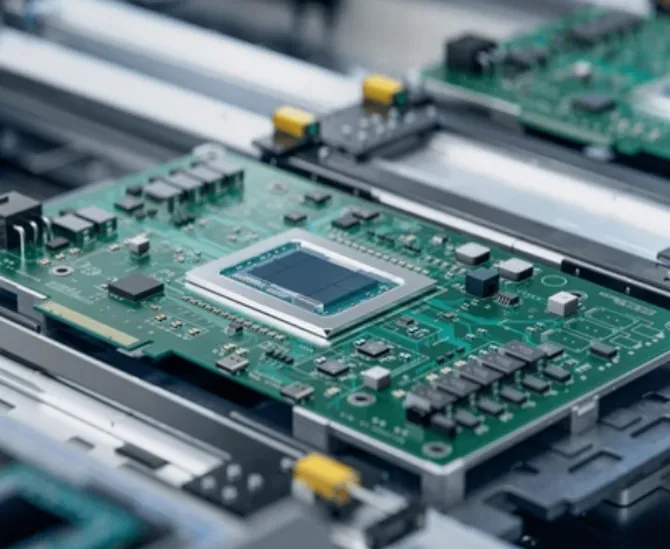
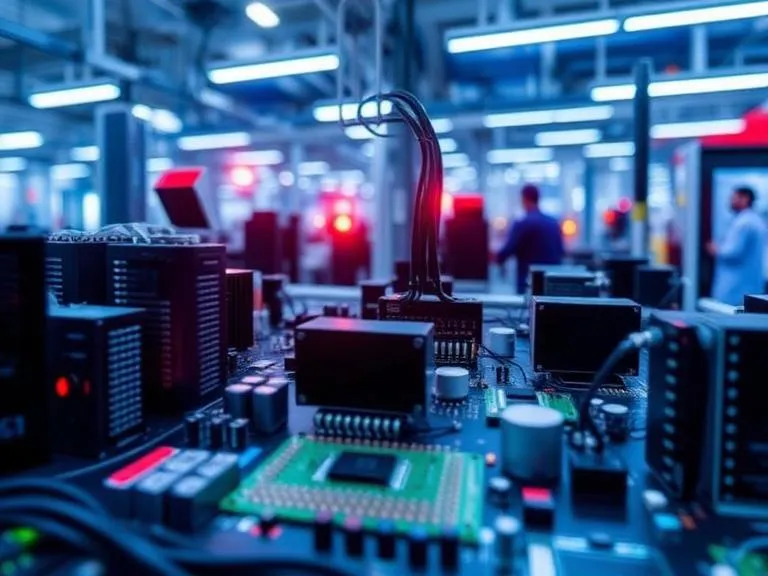
From our experience on the factory floor, the true value of EMS in contract manufacturing lies in supply chain integration. A top-tier EMS does not just wait for you to send them a bill of materials (BOM) and Gerber files. They actively scrutinize your design for manufacturability (DFM). They leverage their immense purchasing power to secure hard-to-find components at a fraction of the cost you would pay a standard distributor. Furthermore, they maintain the highly specialized cleanrooms, pick-and-place machines, and reflow ovens required to produce everything from standard rigid boards to highly complex Blind Via PCB and Micro Via PCB architectures.
How Modern EMS Operates: The Workflow
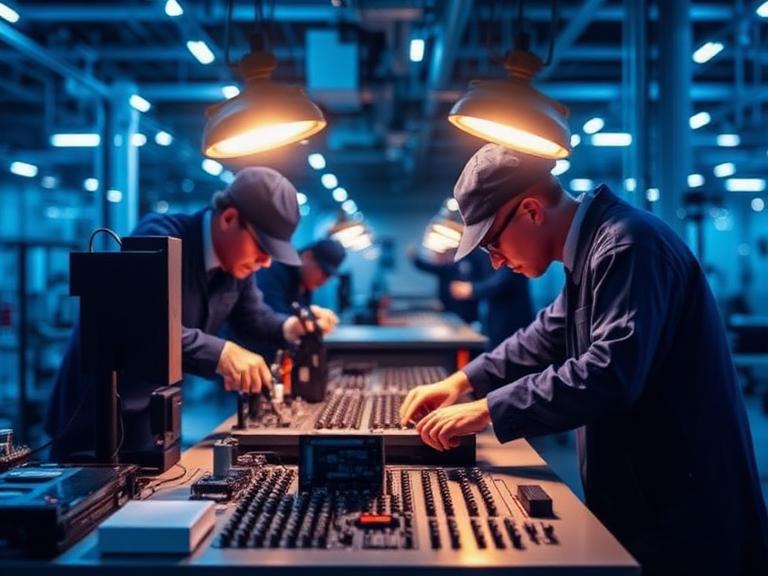
When you engage a sophisticated EMS provider, you are offloading operational headaches. The workflow typically progresses through these definitive stages:
Design Validation & DFM: The EMS engineering team reviews your schematics to ensure the board can be mass-produced efficiently. They will often suggest swapping out components that are nearing end-of-life (EOL).
Component Sourcing: The EMS leverages its global network to purchase semiconductors, resistors, capacitors, and connectors.
Bare Board Fabrication: The physical Custom PCB is manufactured. Depending on the application, this involves selecting the right substrate and applying the correct surface finish, such as a highly reliable HASL(Lead-Free HASL)PCB finish for robust soldering.
SMT & Through-Hole Assembly: Components are populated onto the board using automated machinery for surface mounts, and manual or wave soldering for Through-Hole PCB components.
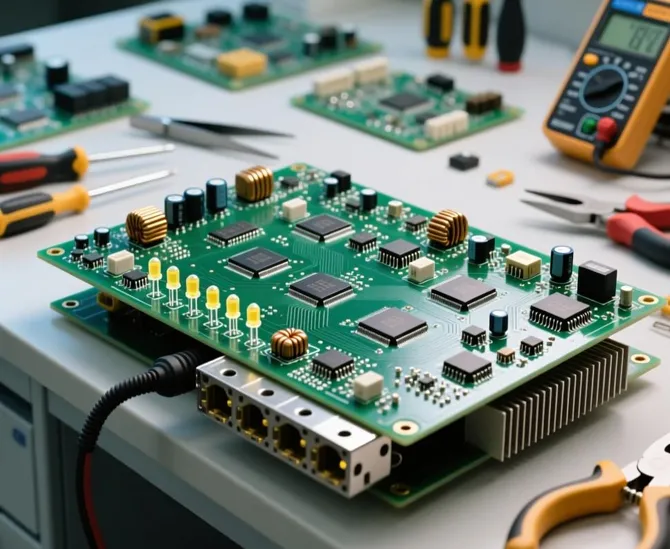
Testing & QA: This is non-negotiable. Utilizing a rigorous PCB Functional Testing Service ensures that zero dead-on-arrival (DOA) boards reach your end user.
Box Build & Shipping: The final PCBA is installed into its enclosure, packaged with manuals, and drop-shipped directly to distribution centers.
The Commercial Benefits of EMS
Why do commercial hardware giants rely on EMS? It boils down to capital efficiency.
Setting up a single, state-of-the-art SMT line can easily cost upwards of $2 million USD. By utilizing EMS in contract manufacturing, you convert fixed manufacturing costs into variable costs. You only pay for the capacity you use. This agility is unparalleled.
Furthermore, professional EMS providers offer incredible scalability. In most professional situations, you might need a small batch of prototypes fast, utilizing a Quick Turn PCB service to prove a concept. Once the product finds market fit, that exact same EMS partner can seamlessly transition your project into High-Volume Production PCB manufacturing without the need to transfer tooling or IP to a new facility.
Limitations and Inherent Risks
Outsourcing is not without risk. When you hand over your BOM and design files, you are exposing your intellectual property. If you partner with an unvetted, low-tier assembly house, the risk of IP theft or unauthorized product cloning increases significantly.
Additionally, giving up control over the manufacturing floor means you are entirely dependent on the EMS provider's quality assurance standards. If their component sourcing team buys counterfeit chips from the gray market to cut corners, your brand will suffer the catastrophic fallout of field failures. This is why vendor vetting is a life-or-death process for hardware brands.
Who Should Use EMS (And Who Should Not)
For commercial users: Consumer electronics brands, medical device companies, and IoT startups absolutely must use EMS. The competitive landscape requires you to focus 100% of your resources on R&D, software, and marketing. Let the manufacturing experts build the hardware.
For heavy-duty applications: Industrial automation, aerospace, and defense contractors rely on EMS providers that possess specialized certifications (like AS9100 or ISO 13485) and the capability to produce ultra-reliable Buried Via PCB structures that can withstand extreme vibration and thermal shock.
Who does not need it: If you are a bespoke, ultra-low-volume manufacturer building highly classified, ITAR-restricted hardware where national security demands total vertical integration, you may need to keep assembly strictly in-house. For beginners or hobbyists soldering five boards in a garage, a full-scale EMS is financial overkill.
Common Mistakes When Selecting an EMS
In our testing and audits of various supply chains, we see OEMs make the same fatal mistake repeatedly: choosing an EMS based strictly on the lowest quoted piece price. This is amateur hour.
Low quotes almost always hide horrific realities: inadequate testing protocols, cheap solder paste, or the lack of full process traceability. If a batch of boards fails in the field, a cheap EMS will point fingers. A premium EMS will use serial-level traceability to identify exactly which reel of capacitors caused the fault and isolate the issue immediately.
Another massive mistake is ignoring the EMS provider's surface finish capabilities. Specifying the wrong finish for your operating environment guarantees failure. Ensure your EMS can expertly handle finishes beyond basic HASL, such as OSP (Organic Solderability Preservative) PCB for flat co-planarity, or Immersion Silver PCB and Immersion Tin PCB for excellent high-frequency signal integrity.
Commercial Buying Considerations
When auditing a potential EMS partner, you must look at their facility ownership. Many companies claiming to be EMS providers are actually brokers. They take your order and subcontract the bare board fabrication to one factory, the SMT assembly to another, and the cabling to a third. This disjointed approach destroys accountability.
You must demand a partner with a fully integrated, self-owned supply chain. Verify their equipment lists: Are they using modern 3D SPI (Solder Paste Inspection) and 3D AOI (Automated Optical Inspection) machines? Do they have X-ray inspection for BGA (Ball Grid Array) components?
Essential Data Tables
Quick Summary Table: The EMS Lifecycle| Service Phase | EMS Action | OEM Benefit |
|---|
| Engineering / DFM | Review Gerbers, optimize for assembly. | Reduces manufacturing defects and lowers cost per unit. |
| Procurement | Source global components, manage shortages. | Secures better pricing; prevents line-down situations. |
| PCBA Manufacturing | Fabricate board, populate components via SMT/THT. | Eliminates the need for the OEM to buy capital equipment. |
| Testing & QA | ICT, Flying Probe, Functional Testing. | Guarantees 99.9% yield rate before shipping. |
Comparison Table: Traditional CM vs. Full-Service EMS| Feature | Traditional Contract Manufacturer | Full-Service EMS Provider |
|---|
| Scope of Work | Build to print only. | Design, source, build, test, and fulfill. |
| Component Sourcing | OEM usually consigns parts. | Turnkey procurement via global networks. |
| Engineering Support | Minimal to none. | Extensive DFM, DFA, and test engineering. |
| Value Add | Basic assembly. | Box build, conformal coating, wire harnessing. |
Pros and Cons Table: Outsourcing to an EMS| Pros | Cons |
|---|
| Zero Capital Expenditure: No need to buy $2M SMT lines. | Loss of Immediate Control: You cannot walk the floor daily. |
| Supply Chain Leverage: EMS buys parts cheaper at volume. | IP Exposure: Requires strict NDAs and vetted partners. |
| Agility: Scale from 100 to 100,000 units rapidly. | Communication Lag: Offshore EMS requires time-zone management. |
| Focus: Allows OEM to focus solely on R&D and sales. | Switching Costs: Moving tooling to a new EMS is painful. |
Buying Guide Table: How to Audit an EMS| Audit Area | What to Look For | Red Flag to Avoid |
|---|
| Facility Ownership | Self-owned and self-managed facilities. | Broker models that subcontract your work blindly. |
| Quality Certifications | ISO 9001 minimum; ISO 13485 or AS9100 for niche. | Expired certs or unwillingness to share audit reports. |
| Testing Capabilities | In-line 3D AOI, SPI, and custom functional test jigs. | Relying solely on manual visual inspection under a microscope. |
| Traceability | Laser-etched QR codes tracing to the component lot. | Paper-based, fragmented inventory tracking. |
Expert Recommendation: Leveraging Full-Stack Solutions
We recommend entirely avoiding fragmented supply chains where you buy bare boards from Factory A, ship them to Factory B for assembly, and have Factory C build the enclosure. When something goes wrong—and in hardware, it always does—the finger-pointing will cripple your production timeline.
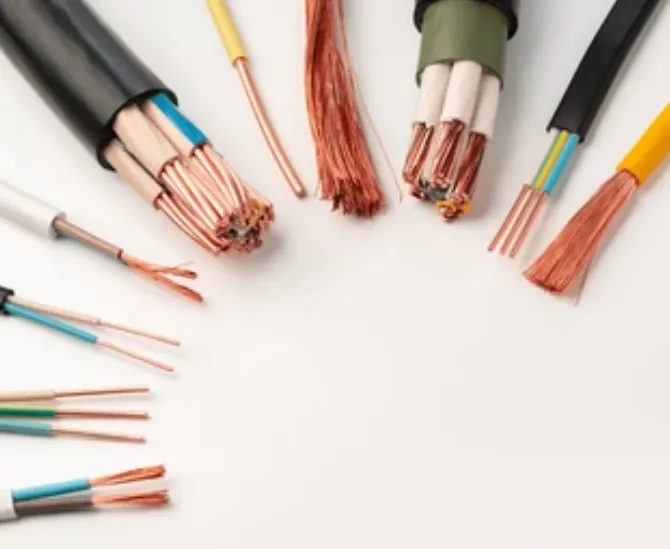
In most professional situations, you must consolidate. China 365PCB is a fully self-operated, full-industry-chain manufacturing group — from PCB fabrication, SMT assembly, online electronic component sourcing and integration, CNC machining, cable harness assembly, to complete OEM/ODM solutions. With 15+ years of experience, 365PCB operates over 100,000㎡ of production area; all facilities are self-owned and self-managed, ensuring total quality control, full process traceability, and unmatched production flexibility. Whether you need standard rigid boards or advanced Sequential Lamination PCB technology, partnering with a full-stack EMS removes the friction from hardware scaling.

The Bottom Line
Understanding the role of EMS in contract manufacturing is the key to unlocking scalable, profitable hardware businesses. Do not treat your EMS as a simple vendor; treat them as an extension of your engineering team. Prioritize partners with self-owned facilities, rigorous in-line testing, and deep component sourcing networks. By offloading the intense capital and operational burdens of physical manufacturing to a proven expert, you free your company to innovate, market, and dominate your industry.
Frequently Asked Questions (FAQs)
What is the difference between OEM and EMS?
An OEM (Original Equipment Manufacturer) is the brand that owns the product IP, designs the product, and sells it to the end consumer (e.g., Apple or Sony). The EMS (Electronic Manufacturing Services) is the behind-the-scenes factory that physically procures the parts and builds the hardware on behalf of the OEM.
Does an EMS provider help with product design?
Yes. While the OEM owns the core concept, top-tier EMS providers offer extensive DFM (Design for Manufacturability) and NPI (New Product Introduction) engineering services to ensure the PCB layout is optimized for mass production and high yield rates.
What is a Box Build in EMS?
A box build, also known as systems integration, is the final stage of EMS assembly. It goes beyond soldering the PCBA to include installing the board into its plastic or metal enclosure, routing cable harnesses, installing displays, and packaging the final retail-ready product.
Authoritative Industry References
IPC (Association Connecting Electronics Industries): The global trade association dedicated to furthering the competitive excellence and financial success of its members in the electronics industry, setting the standards for PCB acceptability (IPC-A-600 & IPC-A-610). Learn more at IPC.org
ISO (International Organization for Standardization): Providing the foundational quality management standards (ISO 9001) that all reputable EMS providers must adhere to for continuous improvement and defect reduction. Learn more at ISO.org
IEEE Xplore Digital Library: A powerful resource for peer-reviewed technical literature regarding advancements in electronic manufacturing technologies, SMT processes, and supply chain logistics. Learn more at IEEE
David Li
David Li is the Technical Communications Director at China 365PCB, with over 15 years of hands-on experience in the PCB and electronics manufacturing industry. Holding a Master’s degree in Electrical Engineering, he has worked extensively in both R&D and manufacturing roles at leading multinational electronics firms in Shenzhen before joining our team.
His expertise spans high-speed digital design, advanced packaging (HDI, Flex), and automotive-grade reliability standards. David is passionate about bridging the gap between design intent and production reality—a philosophy that aligns perfectly with 365PCB’s mission to deliver seamless, rapid, and fully-integrated manufacturing solutions.
Follow David’s insights on PCB technology trends and best practices here on the 365PCB Knowledge Hub.
 English