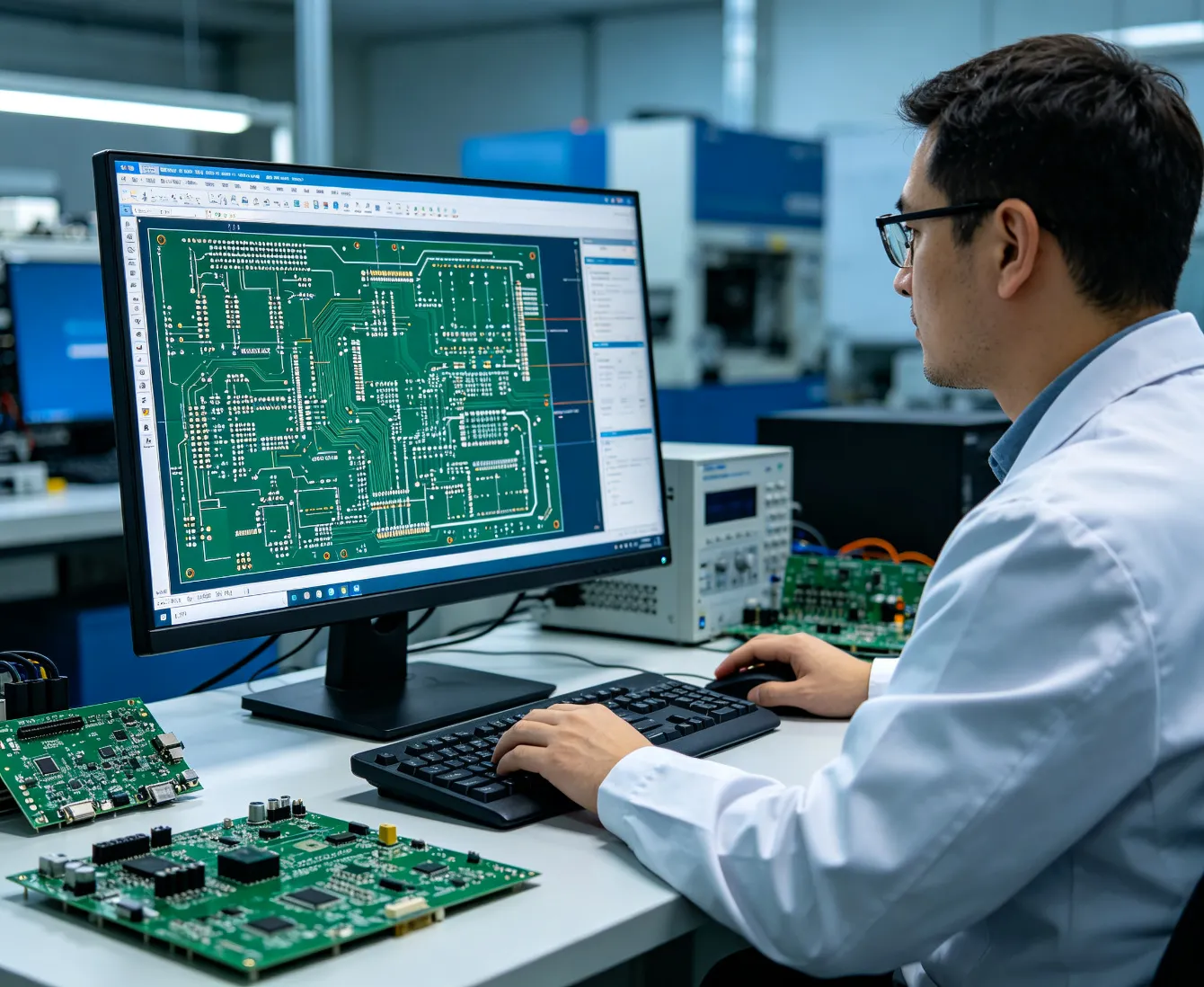
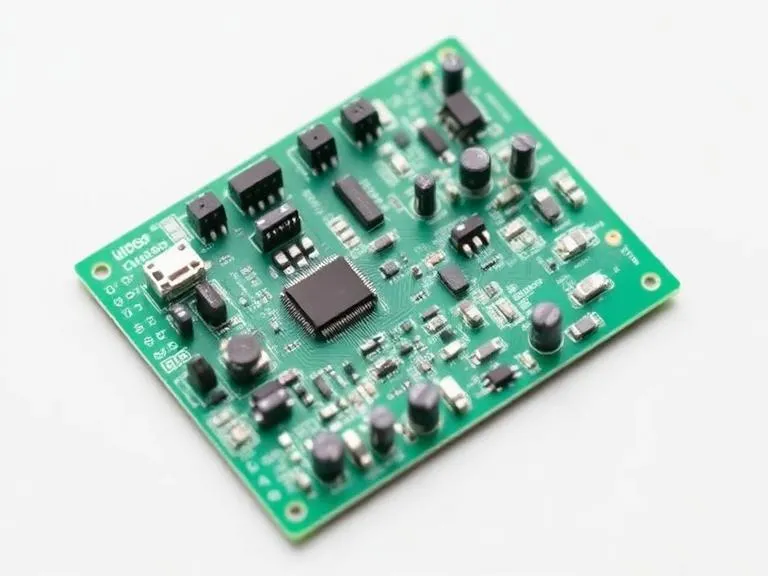
Bridging the gap between a digital engineering schematic and a functional physical product is the most critical phase of hardware development. From our experience, many hardware teams struggle not with the ECAD design logic, but with the transition to physical manufacturing. Missing production files, vague material specifications, and poor communication with fabrication houses result in delayed lead times, compromised signal integrity, and expensive scrap material.
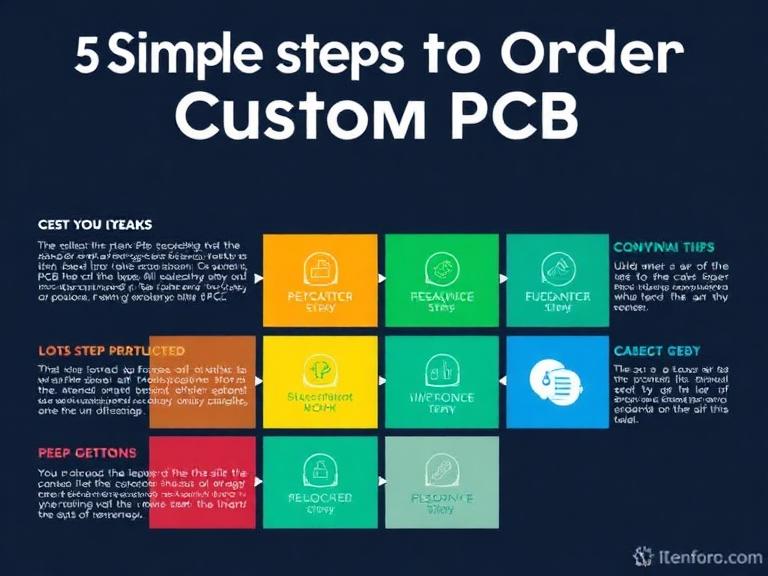
If you want to order a custom PCB efficiently, you cannot afford to treat the manufacturer as a mere print shop. You must understand the data they require and the physical parameters that define your board's reliability under thermal and mechanical stress. In most professional situations, treating PCB procurement strategically is what separates highly scalable hardware enterprises from amateur hobbyists.
Quick Answer: How to Order a Custom PCB
The process to order a custom PCB requires five essential and sequential steps:
Finalize your ECAD layout and export standard production files (Gerber RS-274X or ODB++, BOM, and Pick-and-Place data).
Define the physical specifications of your board, including layer count, dielectric material (FR4 vs. advanced laminates), copper weight, and surface finish.
Determine your assembly requirements, deciding between Turnkey (the manufacturer sources all parts) or Consigned (you provide the parts).
Upload your files for a thorough Design for Manufacturability (DFM) review and generate a detailed quote.
Authorize the production release, select shipping preferences, and initiate fabrication.
We recommend using a full-industry-chain manufacturer to handle bare board fabrication and PCBA assembly under one roof to eliminate logistical friction and guarantee process traceability.
What It Is and How It Works
When you order a custom PCB, you are contracting a specialized manufacturing facility to translate your digital schematic and layout into a physical substrate that routes electrical signals. This involves a highly complex, multi-stage chemical and mechanical process: photolithography to etch microscopic copper traces, heat lamination of fiberglass layers, precision CNC drilling for vias, and chemical electroplating for surface finishes.
How it works fundamentally relies on a seamless transfer of data. Your ECAD software (Altium, KiCad, Eagle, Allegro) contains the geometry of your board. By exporting this geometry into standardized industry formats, you provide the manufacturer with the exact blueprint. The manufacturer then runs a strict DFM (Design for Manufacturability) check to ensure your trace widths, electrical clearances, and drill sizes do not violate their fabrication tolerances. Once verified by CAM engineers, the boards move to the factory floor.
Step 1: Exporting Your Manufacturing Data
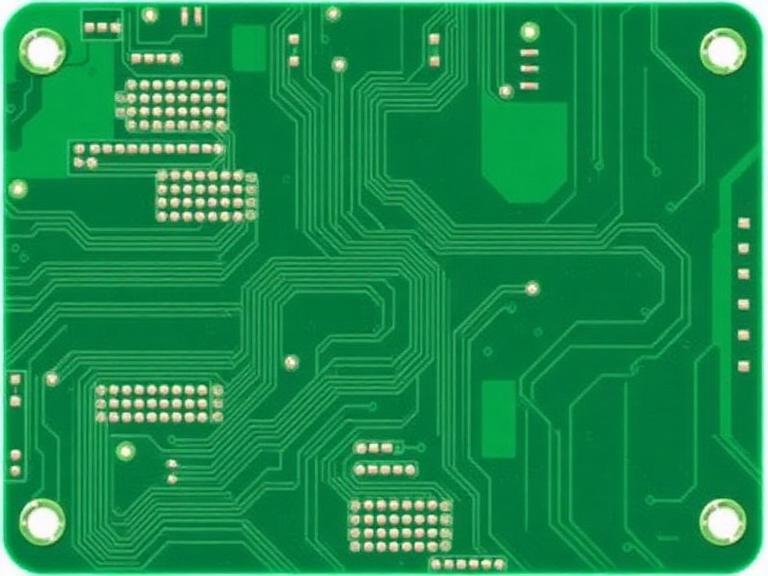
The first and most critical step to order a custom PCB is generating the correct output files. Your proprietary ECAD project file is useless to a factory machine. You must provide universally accepted data formats that drive the CNC machines and optical plotters.
From our experience, the absolute industry standard is Gerber RS-274X or the more modern, intelligent ODB++ format. These files contain individual graphical layers for your copper traces, solder mask, silkscreen, and drill files (NC Drill). If your board requires assembly, you must also export a Bill of Materials (BOM) in a spreadsheet format, meticulously detailing every component's reference designator, component value, footprint package, and manufacturer part number.
Furthermore, automated Surface Mount Technology (SMT) machines require a Centroid file (often called a Pick-and-Place file). This data tells the robotic assembly arms exactly where the X and Y coordinates of every component center lie, along with their precise rotation. Failing to provide accurate Centroid data guarantees catastrophic assembly placement errors.
Step 2: Defining Physical Board Specifications
A custom PCB is never a one-size-fits-all commodity. When you submit your files, you must explicitly declare the physical characteristics of the board, which heavily influence both cost and electrical performance.
First, select your base dielectric material. Standard FR4 (Tg 130-140) is sufficient for basic consumer electronics. However, for extreme thermal environments, you may need High Tg FR4, or Polyimide if you are designing a dynamic Flexible PCB. Next, define your layer count and stackup configuration. As signal complexity increases, so do the internal layers. If you are working on advanced signal integrity applications, you must specify impedance control profiles for your High-speed PCB designs to prevent signal reflection.
Copper weight is another crucial parameter. Standard logic boards utilize 1oz copper, but for heavy-duty applications like motor controllers or power supplies, you may require 2oz, 3oz, or thicker copper to handle high electrical current without thermal failure. Finally, choose your surface finish. Hot Air Solder Leveling (HASL) is the most cost-effective, but for fine-pitch BGA components or advanced packaging like an IC Substrate PCB, Electroless Nickel Immersion Gold (ENIG) is mandatory to ensure a perfectly flat, oxidation-free soldering surface.
Step 3: Determining Assembly and Sourcing Options
If you are exclusively ordering bare boards, you can bypass this step. However, in most professional situations, engineering teams require fully assembled boards (PCBA). You have two primary procurement paths: Consigned or Turnkey.
Consigned means you purchase the electronic components yourself and ship them to the assembly house. We strongly advise against this for commercial users. It creates massive logistical bottlenecks, customs delays, inventory discrepancies, and shifts the liability of missing parts onto your engineering team.
We highly recommend Full Turnkey assembly. In this model, the manufacturer leverages their established global supply chain to source the components, fabricate the bare boards, and assemble them concurrently. This is especially vital for complex validation hardware, such as a Burn in Board PCB or a highly customized Load Board PCB, where component lead times can severely impact project schedules. Turnkey manufacturing drastically reduces administrative overhead; instead of managing dozens of purchase orders across various distributors, your team manages a single vendor relationship.
Step 4: Submitting for DFM and Quoting
Once your files are packaged and your specifications are clearly defined, you must submit them for a Design for Manufacturability (DFM) review. A reputable manufacturer will run your Gerber files through automated software (and manual engineering checks) to identify acid traps, insufficient annular rings, trace-to-trace clearance violations, and overlapping drill hits.
Do not rush the DFM phase. Identifying a layout error during the digital review costs absolutely nothing; identifying it after mass production costs thousands of dollars in scrap. To streamline this process, modern facilities offer a robust PCB Instant Quote system. By uploading your files directly to the portal, the algorithms instantly calculate the cost based on your dimensions, layer count, and material choices, allowing procurement managers to forecast budgets in real-time.
Step 5: Final Review and Production
The final step to order a custom PCB is authorizing the production release. Once you review the manufacturer's Engineering Queries (EQs) and approve any necessary tooling or layout modifications, you proceed to payment and fabrication scheduling.
Top-tier commercial facilities provide comprehensive traceability. During production, the boards undergo rigorous quality control protocols, including Automated Optical Inspection (AOI) and X-ray inspection for hidden BGA solder joints. For specialized testing environments, such as a microscopic Probe Card PCB or a rigorous Semiconductor Test PCB, electrical flying probe testing ensures that every single net has continuity and no short circuits exist before the board is packaged and shipped to your facility.
Commercial Benefits and Limitations
Taking direct control of your hardware supply chain by understanding exactly how to order a custom PCB offers immense commercial benefits. It allows hardware startups to prototype rapidly, iterating complex designs in days rather than months. For enterprise operations, standardizing the procurement process reduces the cost-per-unit and ensures consistent product reliability across massive production runs. Furthermore, advanced packaging needs, such as designing an Interposer PCB or a specialized FC-CSP PCB, are only possible when working intimately with a sophisticated manufacturing partner rather than a generic broker.
The primary limitation of ordering custom circuit boards is the upfront tooling and engineering cost. Unlike off-the-shelf development boards, setting up the CNC drills, photolithography masks, and SMT solder stencils incurs a fixed Non-Recurring Engineering (NRE) fee. Therefore, ordering extremely low volumes carries a high cost-per-board ratio. Additionally, the iterative process requires strict engineering discipline. If a design flaw is found on a custom PCB, you cannot simply rewire it as you would on a breadboard; you must cut traces, solder jumper wires, or order a completely new hardware revision.
Who Should Use Custom PCBs
For commercial users: Any business developing IoT devices, medical equipment, automotive electronics, industrial controllers, or consumer electronics must design and order custom PCBs to protect intellectual property, ensure regulatory compliance, and optimize the physical footprint of their product for mass manufacturing.
Who does not need it: Beginners who are just learning basic electronics theory, Ohm's law, or simple microcontroller programming are better served using solderless breadboards or standard Arduino kits. Custom fabrication should only commence when a circuit design is proven, validated, and requires miniaturization or permanence.
Common Procurement Mistakes
In our testing and industry observation, the most common mistake when ordering PCBs is providing ambiguous BOMs. Listing a generic "10k resistor" without specifying the package size (e.g., 0402 vs. 0805) or the tolerance (1% vs. 5%) will immediately halt the assembly process. The manufacturer cannot guess your intent.
Another critical error is ignoring copper-to-edge clearances. Routing copper traces or placing vias too close to the board outline often results in the router bit exposing or tearing the copper during the final panel depanelization process. Always strictly follow the manufacturer's clearance spacing guidelines before exporting your files.
Buying Considerations and Tables
When selecting a manufacturing partner, you must rigorously evaluate their technological capabilities, their supply chain robustness, and their quality certifications. Treat your PCB manufacturer as a direct extension of your own engineering team.
Buying Guide Table: Specifying Board Requirements
| Factor | Standard Applications | Heavy-Duty / Advanced Applications |
|---|
| Base Material | Standard FR4 (Tg 130) | High Tg FR4, Rogers (RF), Polyimide, Aluminum-backed |
| Surface Finish | HASL (Hot Air Solder Leveling) | ENIG, Hard Gold, Immersion Silver, OSP |
| Copper Weight | 1 oz | 2 oz to 4 oz (Heavy Copper for Power Electronics) |
| Trace/Space Limits | 6 mil / 6 mil | 3 mil / 3 mil or tighter (High-Density Interconnect - HDI) |
Pros and Cons of Full Turnkey Manufacturing
| Pros of Full Turnkey Sourcing | Cons of Full Turnkey Sourcing |
|---|
| Eliminates logistical headaches and customs delays of shipping parts to the assembler. | Requires trusting the manufacturer's sourcing networks and component authenticity checks. |
| Reduces overall lead times as bare board fabrication and component sourcing happen concurrently. | Slightly higher initial quoted cost due to the manufacturer's procurement management fees. |
| Single point of accountability for both bare board physical quality and final assembly yields. | May require you to approve acceptable alternative components if specific parts are out of stock globally. |
| Grants you access to wholesale component pricing through the manufacturer's volume purchasing power. | Less hands-on control over the physical inventory prior to the assembly stage. |
Comparison Table: Prototype vs. Production Orders
| Requirement | Prototype PCB Order | Mass Production PCB Order |
|---|
| Volume | 5 to 50 units | 1,000 to 100,000+ units |
| Lead Time | 24 hours to 5 days (Expedited Processing) | 3 to 5 weeks (Standard Production Schedule) |
| Tooling Costs (NRE) | Often waived or heavily discounted for small runs | Charged upfront, but easily amortized over high volume |
| Testing Protocols | Basic Electrical Flying Probe Testing | Comprehensive ICT, AOI, X-Ray, and Custom Functional Testing |
Expert Recommendation
We strongly advocate for consolidating your supply chain. Relying on one vendor for bare boards, another for SMT stencils, and a third for final assembly is a recipe for disaster and fragmented accountability.
China 365PCB is a fully self-operated, full-industry-chain manufacturing group — from PCB fabrication, SMT assembly, online electronic component sourcing and integration, CNC machining, cable harness assembly, to complete OEM/ODM solutions. With 15+ years of experience, 365PCB operates over 100,000㎡ of production area. All facilities are self-owned and self-managed, ensuring total quality control, full process traceability, and unmatched production flexibility. When you order a custom PCB through our ecosystem, you eliminate the intermediary risks and guarantee that your hardware will perform exactly as designed in the field.
The Bottom Line
Understanding exactly how to order a custom PCB is a fundamental operational skill for any hardware professional. By meticulously preparing your Gerber and BOM files, clearly defining your physical material specifications, and leveraging a full turnkey manufacturing partner, you drastically reduce your time-to-market. Stop treating PCB fabrication as a gamble. Partner with an established, self-operated manufacturing group to ensure your engineering concepts transition flawlessly into commercial reality.
Frequently Asked Questions
What files are absolutely required to order a custom PCB?To order a bare PCB, you must provide Gerber files (RS-274X format) or ODB++ files, along with an NC Drill file. If you require assembly (PCBA), you must also submit a comprehensive Bill of Materials (BOM) in Excel/CSV format and a Pick-and-Place (Centroid) file detailing the exact X, Y, and rotation coordinates for automated component placement.
What is a DFM check in PCB manufacturing?DFM stands for Design for Manufacturability. It is a critical engineering review conducted by the manufacturer before production begins. The DFM check ensures that your design does not violate physical fabrication limits, such as minimum trace widths, drill hole sizes, and copper-to-edge clearances, thereby preventing costly manufacturing failures.
Should I choose HASL or ENIG for my PCB surface finish?HASL (Hot Air Solder Leveling) is highly cost-effective and suitable for larger, through-hole components and basic surface mount parts. However, for high-density boards with fine-pitch components (like BGAs, QFNs, or IC substrates), we strongly recommend ENIG (Electroless Nickel Immersion Gold). ENIG provides a perfectly flat, highly conductive, and oxidation-resistant surface that ensures reliable, long-lasting solder joints.
Authoritative Industry References
IPC (Association Connecting Electronics Industries) - The global trade association dedicated to the competitive excellence and financial success of its member companies representing all facets of the electronics industry, including PCB design, manufacturing, and assembly standards.
JEDEC Solid State Technology Association - The global leader in developing open standards for the microelectronics industry, crucial for understanding semiconductor packaging and substrate requirements.
SMTA (Surface Mount Technology Association) - An international network of professionals who build skills, share practical experience, and develop solutions in electronic assembly technologies and related business operations.
 English