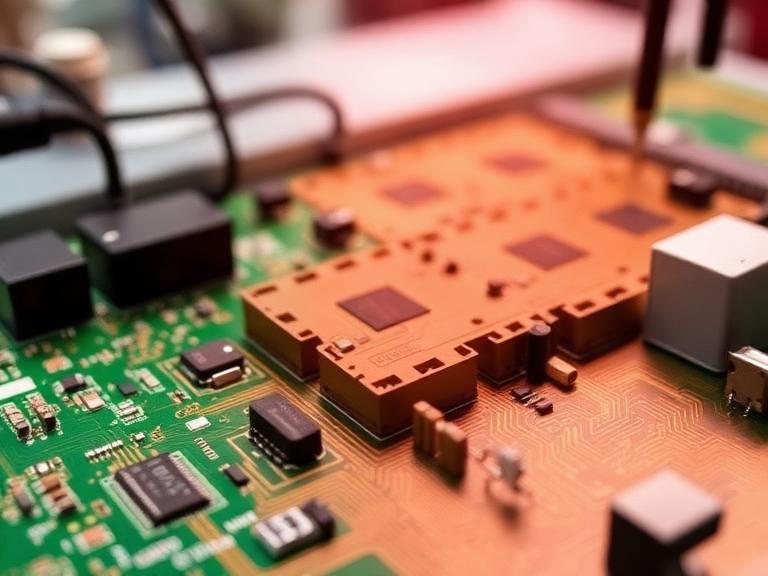
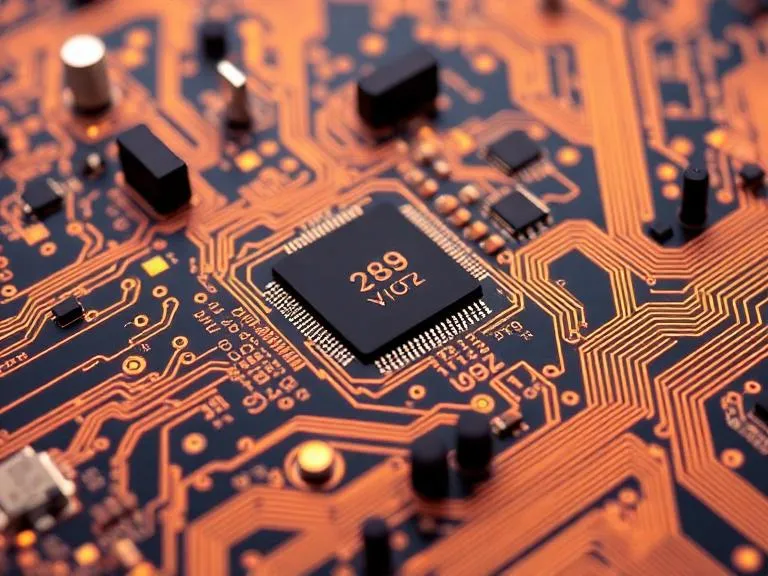
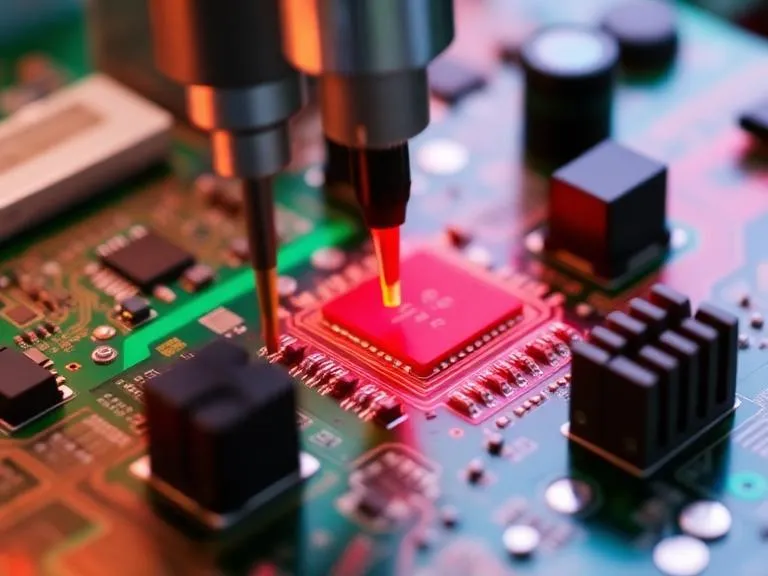
In the modern electronics industry, every smart device, industrial control system, and communication network relies on a foundational component: the Printed Circuit Board. However, a common question arises among engineers and procurement specialists alike: what is the PCB fabrication precisely? In technical terms, PCB fabrication is the complex manufacturing process of translating a digital circuit board design, usually generated via Electronic Design Automation (EDA) software, into a physical, functional, and testable board structure. This intricate process involves a combination of chemical etching, mechanical drilling, photolithography, and high-temperature lamination to create the precise copper routing paths that connect electronic components.
At China 365PCB, we have dedicated over 15 years to mastering this exact discipline. Operating a fully self-owned and self-managed facility spanning over 100,000 square meters, we have witnessed firsthand how critical strict process control is to the final performance of the board. From our experience, poor PCB fabrication directly leads to signal integrity issues, thermal failures, and field returns. We recommend that engineers deeply understand the PCB fabrication workflow to optimize their designs for manufacturability (DFM) and ensure their products achieve absolute reliability. This article provides a comprehensive exploration of the PCB fabrication process, advanced material selections, and critical manufacturing techniques.
1. The Core Definition: What is the PCB Fabrication?
To thoroughly answer what is the PCB fabrication, one must separate fabrication from assembly. PCB fabrication strictly refers to the creation of the bare board itself. It does not include the placement and soldering of electronic components (which is known as PCBA or SMT assembly). The goal of PCB fabrication is to build a mechanical substrate with insulated layers and highly conductive copper pathways that perfectly match the engineer's Gerber files or ODB++ data.
The PCB fabrication process is inherently subtractive and additive. It begins with a core material—typically a fiberglass-epoxy composite—clad in solid copper sheets. Through a series of chemical and optical steps, unwanted copper is etched away (subtractive), while necessary copper is plated into drilled holes to create electrical connections between layers (additive). We recommend viewing PCB fabrication not just as a manufacturing step, but as a complex chemical engineering process where temperature, humidity, chemical concentration, and timing must be controlled to microscopic tolerances.
2. Key Stages in the PCB Fabrication Process
Understanding the standard multilayer PCB fabrication workflow is essential for identifying where design constraints originate. The following represents the critical path in a modern production facility.
Stage 1: DFM Check and Material Preparation
Before physical manufacturing begins, a rigorous Design for Manufacturability (DFM) review is conducted. Engineers verify that the specified trace widths, clearances, and hole sizes align with the facility's capabilities. Once approved, the base laminate materials are cut to standard panel sizes. Depending on the product requirements, different materials are selected, ranging from standard FR4 to specialized composites.
Stage 2: Inner Layer Imaging and Etching
For multilayer boards, PCB fabrication starts with the inner layers. The copper-clad laminate is coated with a photosensitive film called photoresist. UV light is projected through a photographic film mapping the circuit design, hardening the photoresist over the desired copper traces. The panel is then washed in a developer solution, revealing the unwanted copper, which is subsequently dissolved using an alkaline etching chemical. From our experience, maintaining precise chemical bath concentrations during this step is paramount to preventing under-etching or over-etching of the traces.
Stage 3: Automated Optical Inspection (AOI) and Lay-Up
After etching, the inner layers undergo Automated Optical Inspection (AOI) to detect any shorts, opens, or trace defects. Once cleared, the layers are stacked together with sheets of prepreg (fiberglass impregnated with uncured epoxy resin) acting as the glue. The stack is placed into a lamination press, where immense heat and pressure melt the prepreg, fusing the layers into a single, solid board.
Stage 4: Drilling and Electroless Plating
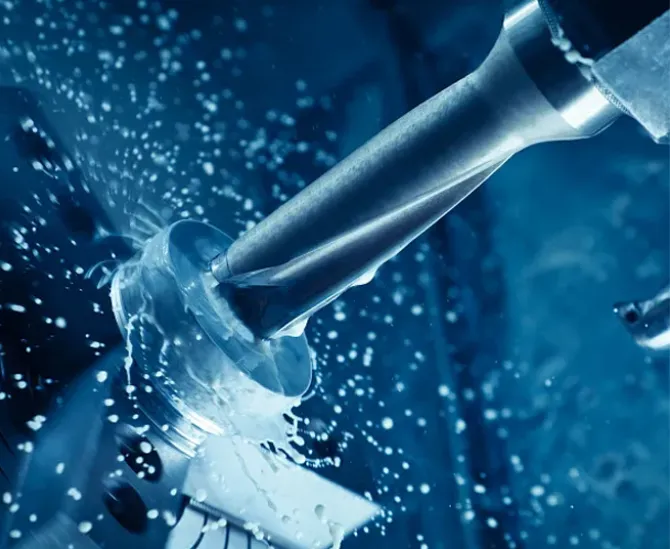
The laminated panel is then moved to a computer numerical control (CNC) drilling machine. These high-speed drills create the holes required for component leads and vias (interlayer connections). Because the walls of the newly drilled holes consist of non-conductive fiberglass and resin, a thin layer of copper must be chemically deposited inside the holes via an electroless copper plating process. This step is a defining moment in PCB fabrication, establishing the critical electrical bridge between the top, bottom, and internal layers.
Stage 5: Outer Layer Imaging, Plating, and Etching
The outer layers follow a similar photolithography process as the inner layers, but with a crucial difference. In outer layer PCB fabrication, the photoresist covers the areas where copper is not wanted. Additional copper is electroplated onto the exposed traces and inside the drilled holes to increase thickness. A layer of tin is then plated over the copper to protect it. The photoresist is stripped away, and the newly exposed background copper is etched off. Finally, the protective tin is chemically stripped, leaving robust, isolated copper circuitry.
Stage 6: Solder Mask, Silkscreen, and Surface Finish
To protect the copper from oxidation and prevent solder bridges during assembly, a liquid photo-imageable (LPI) solder mask is applied, exposing only the pads where components will be soldered. Identifying text and logos are then printed using a silkscreen process. Finally, a surface finish—such as HASL, ENIG, or Immersion Silver—is applied to the exposed copper pads to ensure exceptional solderability and long-term shelf life.
3. Advanced Substrate Materials in PCB Fabrication
As electronic demands evolve, standard FR4 is not always sufficient. We recommend matching the substrate material strictly to the environmental and electrical demands of the final product. At China 365PCB, our fully self-operated facilities handle a diverse range of specialized materials.
For high-power LED lighting and automotive power converters, thermal management is critical. In these scenarios, a Copper PCB provides superior heat dissipation compared to standard laminates. For consumer electronics with strict budget constraints, FR2 PCB and CEM Series PCB materials offer cost-effective solutions for simple, single-sided or double-sided applications without compromising basic functionality.
Conversely, the telecommunications and aerospace sectors demand substrates with extremely low dielectric loss. For high-frequency RF and microwave applications, we extensively utilize PTFE PCB materials. Additionally, for rigid-flex designs or applications requiring immense flexibility and thermal resistance, Polyimide PCB substrates are the industry standard. Mastery of these diverse materials is a hallmark of elite PCB fabrication.
4. HDI and Advanced Routing Technologies
High-Density Interconnect (HDI) technology has fundamentally changed the landscape of PCB fabrication. As smartphones, wearables, and IoT devices shrink, engineers must route more connections in less space. This requires abandoning standard through-hole drilling in favor of advanced via structures.
A Through-Hole PCB remains highly reliable for heavy components, but for high-density routing, laser-drilled Micro Via PCB technology is required. To save surface area, designers utilize a Blind Via PCB to connect an outer layer to an inner layer without piercing the entire board. Furthermore, a Buried Via PCB connects internal layers exclusively, remaining completely hidden from the outer surfaces.
Manufacturing these complex HDI structures requires a specialized PCB fabrication technique known as Sequential Lamination PCB processing. From our experience, sequential lamination demands extraordinary precision. The board must be pressed, drilled, and plated multiple times. Any dimensional instability during these repeated heating cycles will result in severe misalignment. This is why full process traceability and stringent quality control are non-negotiable in advanced PCB fabrication.
5. The Strategic Advantage of In-House PCB Fabrication
China 365PCB is a fully self-operated, full-industry-chain manufacturing group. We manage everything from raw PCB fabrication to SMT assembly, online electronic component sourcing, CNC machining, cable harness assembly, and complete OEM/ODM solutions. With over 15 years of dedicated manufacturing experience, we operate over 100,000 square meters of production area.
Why does this matter for your project? The industry is plagued by brokers and middlemen who outsource PCB fabrication to the lowest bidder. This fragmentation leads to communication breakdowns, hidden quality compromises, and delayed shipments. At 365PCB, all facilities are self-owned and self-managed. We never outsource, and we never compromise. Our commitment is built on speed, precision, and responsibility. By keeping every board, every circuit, and every connection within our own facilities, we guarantee unmatched production flexibility and a one-stop turnkey service with no delay and no excuses—truly realizing 365 days of fast manufacturing for global customers.
6. Summary Table: PCB Fabrication Capabilities
Fabrication Category
Technology / Material
Primary Application
Key Engineering Advantage
Standard Substrates
FR4, FR2, CEM Series
Consumer electronics, industrial controls
Cost-effective, highly reliable for general use.
High-Frequency & Flex
PTFE, Polyimide
Aerospace, RF/Microwave, Wearables
Low dielectric loss, extreme thermal and mechanical resilience.
Thermal Management
Copper Core, Aluminum Base
High-power LED, Automotive power electronics
Superior heat dissipation, extends component lifespan.
HDI & Interconnects
Blind, Buried, Micro Vias
Smartphones, Medical implants, IoT modules
Maximizes routing density in highly restricted mechanical enclosures.
Advanced Processing
Sequential Lamination
Complex multi-tier HDI boards
Allows for staggered and stacked via structures across multiple lamination cycles.
7. Frequently Asked Questions (FAQs)
What is the PCB fabrication process time typically?
From our experience, standard prototype PCB fabrication takes between 24 hours to 3 days, depending on the layer count. High-volume production or complex HDI boards utilizing sequential lamination generally require 2 to 3 weeks due to the multiple pressing and laser-drilling cycles involved.
How does PCB fabrication differ from PCB assembly?
PCB fabrication is the creation of the bare circuit board itself—cutting the substrate, etching the copper traces, drilling the vias, and applying the solder mask. PCB assembly (PCBA) is the subsequent step where electronic components like microchips, resistors, and connectors are soldered onto that bare fabricated board.
Why is electrical testing necessary during PCB fabrication?
We recommend 100% electrical testing—typically via flying probe or bed-of-nails fixtures—because microscopic defects can occur during etching or plating. A tiny speck of residual copper can cause a short circuit, while a micro-fracture in a via barrel can cause an open circuit. Electrical testing ensures the physical board matches the digital netlist perfectly before components are wasted during assembly.
What is the advantage of using a fully self-operated manufacturer?
A fully self-managed facility like China 365PCB ensures total quality control and full process traceability. When PCB fabrication is not outsourced, engineers benefit from direct communication, faster turnaround times, and the elimination of middleman markups, resulting in absolute reliability from design to final delivery.
8. Industry References
Institute of Printed Circuits (IPC). (2025). IPC-2221B: Generic Standard on Printed Board Design. Retrieved from ipc.org
National Institute of Standards and Technology (NIST). (2024). Advanced Electronics Manufacturing and Traceability. Retrieved from nist.gov
U.S. Department of Energy. (2023). Thermal Management Substrates in High-Power Electronics. Retrieved from energy.gov
David Li
David Li is the Technical Communications Director at China 365PCB, with over 15 years of hands-on experience in the PCB and electronics manufacturing industry. Holding a Master’s degree in Electrical Engineering, he has worked extensively in both R&D and manufacturing roles at leading multinational electronics firms in Shenzhen before joining our team.
His expertise spans high-speed digital design, advanced packaging (HDI, Flex), and automotive-grade reliability standards. David is passionate about bridging the gap between design intent and production reality—a philosophy that aligns perfectly with 365PCB’s mission to deliver seamless, rapid, and fully-integrated manufacturing solutions.
Follow David’s insights on PCB technology trends and best practices here on the 365PCB Knowledge Hub.
We use cookies to offer you a better browsing experience, analyze site traffic and personalize content. Part of the tracking is necessary to ensure SEO effectiveness, By using this site, you agree to our use of cookies.
Visit our cookie policy to learn more.
 English