In the rapidly advancing world of electronics manufacturing, selecting the appropriate substrate for your circuitry is a foundational decision that impacts product longevity, performance, and overall assembly cost. At China 365PCB, we operate as a fully self-operated, full-industry-chain manufacturing group. From bare board fabrication and Surface Mount Technology (SMT) assembly to online electronic component sourcing, CNC machining, cable harness assembly, and complete OEM/ODM solutions, we have spent over 15 years mastering the intricacies of printed circuit boards. Operating over 100,000 square meters of self-owned and self-managed production area, we ensure total quality control, full process traceability, and unmatched production flexibility for our global clients.
One of the most frequent inquiries we receive from product designers and engineers is regarding the structural and functional material choices available. Specifically, understanding the main distinctions between rigid, flexible, and rigid-flex PCBs is critical for optimizing your product architecture. From our experience, misinterpreting these categories can lead to over-engineered designs that inflate budgets, or under-engineered solutions that fail in the field. In this comprehensive guide, we will dissect the mechanical properties, manufacturing complexities, and ideal application environments to clarify the distinctions between rigid, flexible, and rigid-flex PCBs.
1. Rigid PCBs: The Traditional Foundation
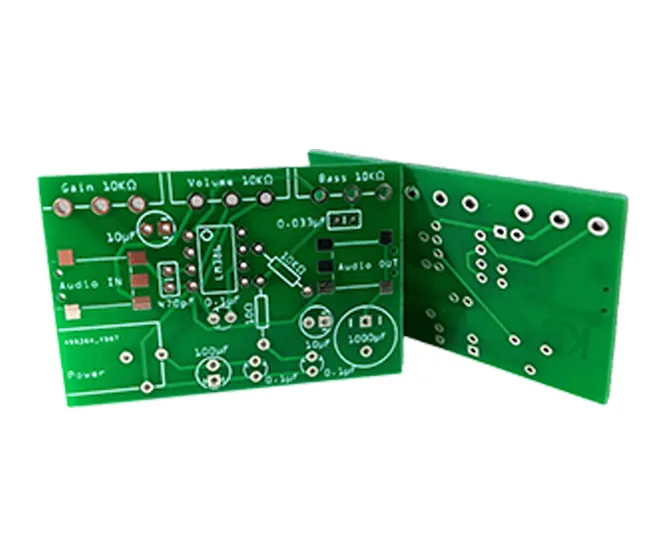
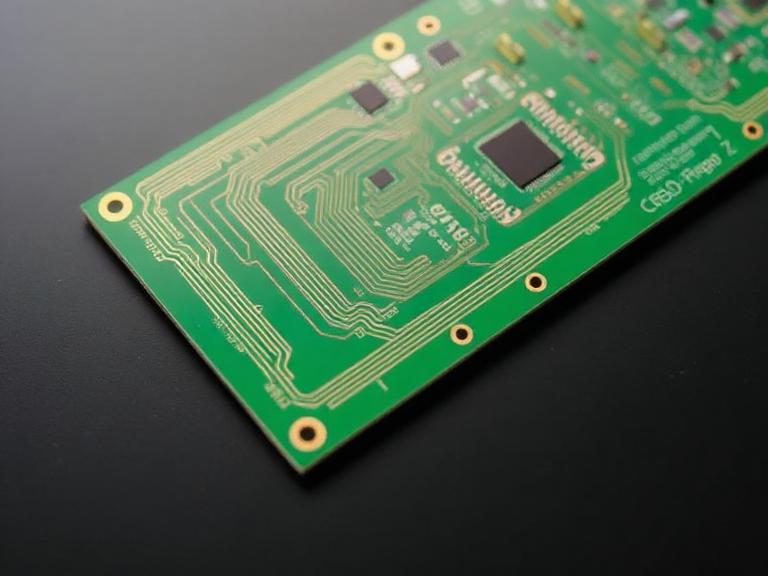
A rigid printed circuit board is exactly what the name implies: a solid, inflexible substrate that cannot be bent or forced out of shape. These boards are predominantly constructed using FR-4 (Flame Retardant 4), a woven glass-reinforced epoxy resin. The rigidity of FR-4 provides substantial mechanical support for heavy electronic components, making it the industry standard for the vast majority of consumer and industrial electronics.
From our experience, rigid boards excel in environments where physical stability is paramount and spatial constraints are not the primary concern. They offer excellent thermal management capabilities and are highly cost-effective to produce in mass volumes. We recommend rigid PCBs for standard flat-plane circuitry where components will not be subjected to continuous kinetic stress. For example, our manufacturing lines frequently output highly reliable Industrial Control PCB units and LED Lighting PCB arrays utilizing multi-layer rigid structures. These applications benefit from the low manufacturing cost and high component density that rigid boards comfortably support.
Advantages of Rigid PCBs
Cost Efficiency: The standardized manufacturing processes make rigid boards the most economical choice.
High Density: Rigid boards can easily scale up to 40+ layers, supporting highly complex routing.
Component Support: The solid substrate easily supports heavy components like transformers and large capacitors without structural bowing.
2. Flexible PCBs: Engineering for Dynamic Environments
Flexible PCBs, commonly referred to as flex circuits, are designed to bend, twist, and fold. Instead of rigid FR-4, flex circuits utilize a flexible polymer base, most notably Polyimide (PI). Polyimide is prized for its exceptional thermal stability, chemical resistance, and excellent dielectric properties. Flexible PCBs can be designed for static applications (flex-to-install, where the board is bent once during assembly) or dynamic applications (where the board is continuously flexed during its operational lifespan, such as in a laptop hinge or a printer head).
Evaluating the distinctions between rigid, flexible, and rigid-flex PCBs requires understanding spatial geometry. Flex circuits eliminate the need for bulky wire harnesses, saving critical space and reducing the overall weight of the final product. We heavily recommend flexible circuits for modern compact electronics. For instance, in the telecommunications sector, space is at an absolute premium. A well-designed Telecommunication PCB often relies on polyimide substrates to navigate tight enclosures while maintaining high-speed signal integrity.
Advantages of Flexible PCBs
Space and Weight Reduction: Flex circuits can reduce wiring weight by up to 70% compared to traditional wire harnesses.
Vibration Resistance: The lack of heavy connectors and the pliable nature of the substrate make flex circuits highly resistant to vibrational fatigue.
Airflow Improvement: Replacing bulky cables with flat, streamlined flex circuits drastically improves internal airflow and thermal cooling within tight enclosures.
3. Rigid-Flex PCBs: The Ultimate Hybrid Solution
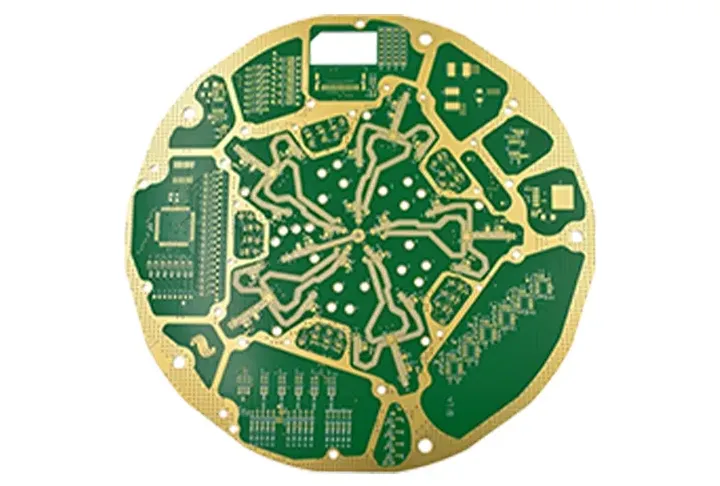
Rigid-flex PCBs represent the pinnacle of interconnect technology. As the name suggests, this architecture integrates both rigid FR-4 and flexible polyimide substrates into a single cohesive unit. The flexible layers are sandwiched between the rigid layers and internally connected through plated through-holes (PTH). This hybrid approach creates a three-dimensional interconnect system that can be folded into complex configurations.
The primary engineering advantage here is the total elimination of external connectors and wire harnesses between disparate rigid boards. Connectors are notoriously the weakest link in any electronic assembly, prone to oxidation, vibration failure, and impedance mismatch. By removing them, rigid-flex technology offers unparalleled reliability. We recommend rigid-flex solutions for mission-critical applications where failure is not an option. Our facilities routinely manufacture high-reliability Aerospace PCB and Military PCB assemblies utilizing advanced rigid-flex configurations, ensuring they survive extreme shock, vibration, and thermal cycling.
Advantages of Rigid-Flex PCBs
Maximum Reliability: Eliminating mechanical connectors drastically reduces points of failure.
Simplified Assembly: Since the entire multi-board system is manufactured as one piece, the final assembly process is highly streamlined, reducing manual labor errors.
Signal Integrity: Continuous routing across the rigid and flex zones without connector interruptions ensures superior high-frequency signal performance.
4. Core Distinctions Between Rigid, Flexible, and Rigid-Flex PCBs
To fully grasp the structural and economic impact on your project, we must analyze the main distinctions between rigid, flexible, and rigid-flex PCBs across several critical engineering vectors.
Material Composition: The base dielectric defines the category. Rigid boards use glass-epoxy (FR-4), flexible boards use polyimide, and rigid-flex uses a sophisticated lamination of both. The adhesive systems used to bond these materials are also distinct. Flex and rigid-flex boards often require specialized acrylic or epoxy adhesives, or utilize advanced adhesiveless polyimide for thinner, more reliable profiles.
Design Rules: Designing for flex and rigid-flex is vastly different from traditional rigid layout. Engineers must account for the bend radius. Bending a flex circuit too tightly will fracture the copper traces. Additionally, traces in the flex bending zones must be routed perpendicular to the bend line, and teardrop pads are heavily recommended to prevent the copper from tearing away from the polyimide. When our engineering team reviews files for an EV PCB (Electric Vehicle), we ensure strict adherence to dynamic bending calculations to guarantee longevity under automotive stress.
Thermal Management: Rigid boards, particularly those engineered with thick copper or metal cores, handle extreme heat dissipation better than pure polyimide. However, in renewable energy sectors, a hybrid approach is often needed. A modern Solar PCB might utilize a rigid-flex design where the rigid portion manages heavy power components and heat sinks, while the flex tail navigates tracking mechanisms without fatigue.
5. Manufacturing and Cost Implications
When discussing the distinctions between rigid, flexible, and rigid-flex PCBs, cost is inevitably the deciding factor for procurement teams. From our experience at China 365PCB, operating a one-stop turnkey service, the manufacturing complexity dictates the price point.
Rigid PCBs are processed in highly automated, sequential batches. They have the lowest unit cost. Flexible PCBs require specialized handling. Because the material is literally floppy, it cannot run through standard conveyorized equipment without being taped to rigid leader boards. The dimensional stability of polyimide is also lower than FR-4, meaning the material can stretch or shrink during processing, requiring advanced optical registration for drilling and etching.
Rigid-flex is by far the most complex and expensive to manufacture. It requires multiple lamination cycles. The manufacturer must press the rigid layers, press the flex layers, press them all together, drill, plate, and then perform a highly controlled depth-milling process to remove the rigid material from the flexible bending zones. Any error during these sequential steps ruins the entire panel. However, while the bare board cost of rigid-flex is high, it often lowers the total product cost by eliminating expensive aerospace-grade connectors, reducing assembly labor, and minimizing the physical enclosure size.
At China 365PCB, our 100,000 square meter self-owned facility is equipped to handle these exact complexities. We guarantee no delay, no excuses — truly realizing 365 days of fast manufacturing for global customers regardless of the substrate complexity.
6. Summary Table: PCB Technologies Compared
| Feature | Rigid PCB | Flexible PCB | Rigid-Flex PCB |
|---|
| Base Material | FR-4 (Glass-reinforced epoxy) | Polyimide (PI) | FR-4 + Polyimide hybrid |
| Physical Flexibility | None (Solid structure) | High (Dynamic and static bending) | Zoned (Rigid areas with flexible interconnects) |
| Connector Requirement | Requires headers, cables, and harnesses | Can replace cables; may need ZIF connectors | Eliminates internal board-to-board connectors |
| Manufacturing Cost | Low | Medium | High |
| Vibration Resistance | Low to Medium (Connectors can fail) | High | Very High |
| Typical Applications | Motherboards, Industrial Controls, LED Arrays | Wearables, Telecom antennas, Print heads | Aerospace, Military, High-end Medical devices |
7. Frequently Asked Questions (FAQs)
Can SMT components be placed on the flexible areas of a rigid-flex PCB?
While it is possible to mount components on flexible regions using stiffeners, we generally recommend placing all active and heavy components on the rigid sections. Placing components in active bending zones will inevitably lead to solder joint fatigue and failure over time.
Why is polyimide used instead of cheaper plastics for flexible PCBs?
Polyimide is uniquely capable of withstanding the extreme temperatures of the reflow soldering process (often exceeding 250 degrees Celsius). Cheaper plastics like PET (Polyethylene Terephthalate) will melt during standard SMT assembly, limiting their use to low-tech applications with conductive ink rather than soldered components.
Does China 365PCB provide design assistance for rigid-flex boards?
Yes. As a full-industry-chain manufacturing group, our engineering team provides comprehensive Design for Manufacturability (DFM) reviews. We assist in calculating exact bend radii, material stack-ups, and impedance control to ensure your rigid-flex design translates perfectly from software to physical reality.
How do the distinctions between rigid, flexible, and rigid-flex PCBs affect lead times?
Because rigid boards undergo a standard, streamlined process, they have the fastest turnaround times. Flexible boards require slightly more processing time due to material handling constraints. Rigid-flex boards require the longest lead times due to multiple sequential lamination, drilling, and controlled depth-routing cycles. However, our turnkey service ensures optimization at every step to minimize overall delays.
8. Industry References
To further understand the highly regulated standards governing printed circuit board manufacturing, we recommend reviewing the guidelines established by global engineering authorities. The IPC (Association Connecting Electronics Industries) provides comprehensive standards for rigid (IPC-2221, IPC-2222), flexible (IPC-2223), and rigid-flex design parameters. Additionally, research publications from the IEEE (Institute of Electrical and Electronics Engineers) offer deep insights into the thermal and kinetic reliability of polyimide substrates in aerospace environments.
Understanding the distinctions between rigid, flexible, and rigid-flex PCBs empowers your engineering teams to make informed, cost-effective decisions. At China 365PCB, we stand ready to turn those designs into high-performance realities, ensuring total quality control from raw material to final assembly.
 English