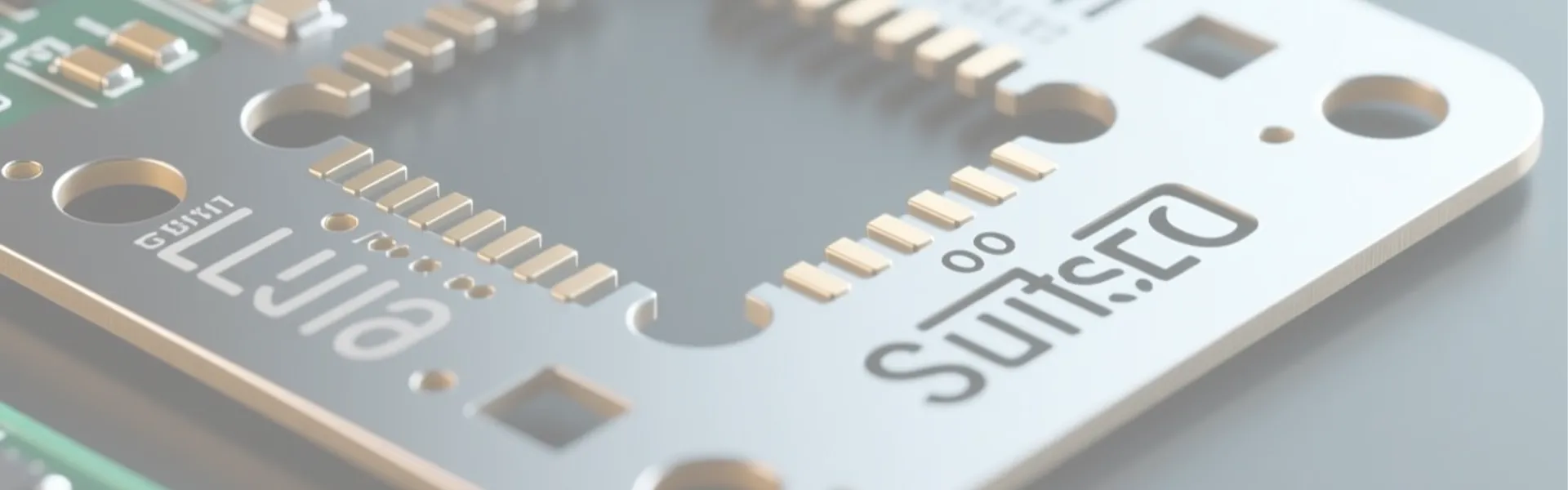
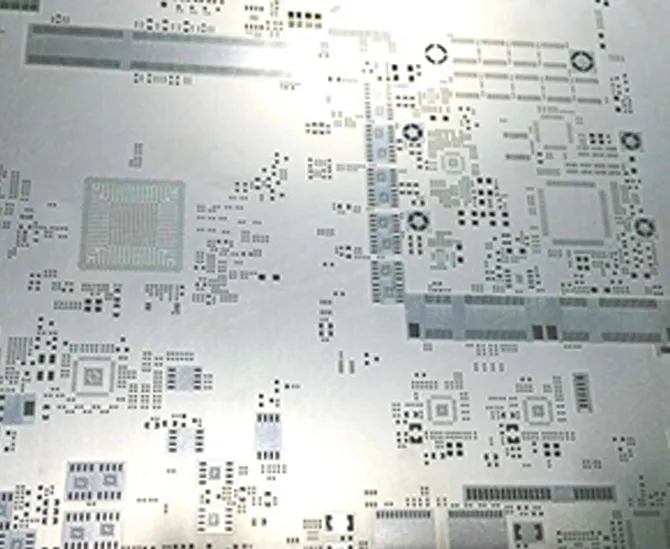


Modern SMT assembly demands far more than a simple laser-cut stencil.
As component sizes shrink, pad geometries become more complex, and fine-pitch devices such as QFN, LGA, BGA and 01005 become standard, stencil manufacturing has become a precision engineering process rather than a commodity service.
At China 365PCB, we specialize in high-difficulty SMT stencil manufacturing for demanding PCB and PCBA applications.
We support ultra-fine pitch and high-density designs with:
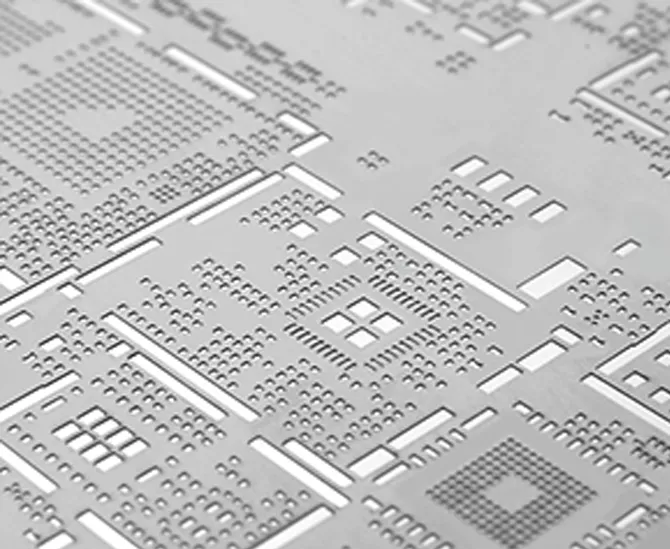
Laser-cut stencils with tight aperture tolerance control
Step stencils for mixed component heights and selective paste volume control
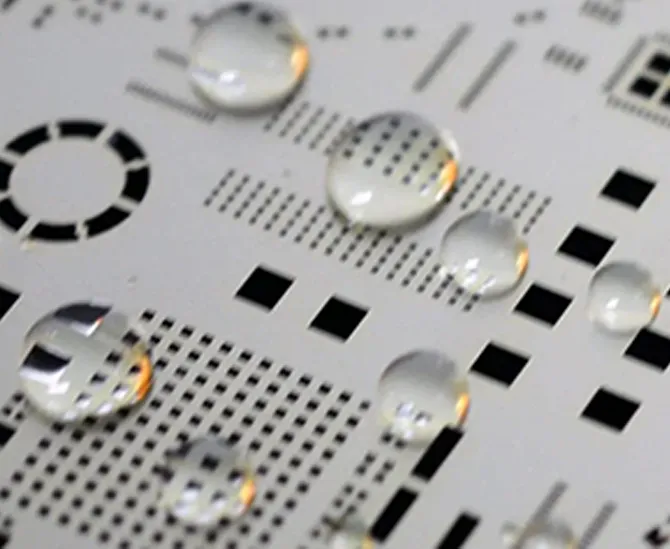
Nano-coating and electro-polished finishes to ensure stable paste release
Optimized aperture design for micro-pitch, window-pane and custom shapes
Every stencil is manufactured with strict flatness control to guarantee consistent solder paste deposition across the entire board.
Our stencil process is not isolated — it is tightly integrated with our PCB and SMT engineering team.
Before production, we review:
Pad design and paste volume requirements
Fine-pitch and thermal pad challenges
Risk areas prone to bridging, insufficient solder or tombstoning
This DFM-oriented stencil engineering approach helps customers improve first-pass yield and reduce rework during SMT assembly.
Whether for rapid prototypes or high-volume production, we ensure:
Stable dimensional accuracy
Long stencil life for mass production
Consistent performance across repeated print cycles
China 365PCB does not treat SMT stencils as accessories —
we treat them as critical process tools that directly impact SMT yield and reliability.
Choose China 365PCB for SMT stencil manufacturing when your project requires precision, consistency, and true engineering expertise — not just a stencil, but a solution.
Definition & Role: SMT stencils (also called solder paste stencils) are laser-cut stainless steel sheets used to apply solder paste accurately onto PCB pads before component placement.
Why Precision Affects Yield: Even minor misalignment or aperture inaccuracy can cause solder bridging, insufficient paste, or assembly defects. Our in-house manufacturing ensures perfect alignment with your PCB design.
Key Specifications: Materials (stainless steel, nickel, nano-coated), thickness (4mil to 8mil standard), aperture wall quality, and frame types (frame, frameless, reusable).
We control every step under one roof:
File Analysis & DFM Check – Our engineers review your Gerber/design files to optimize aperture geometry and stencil specifications.
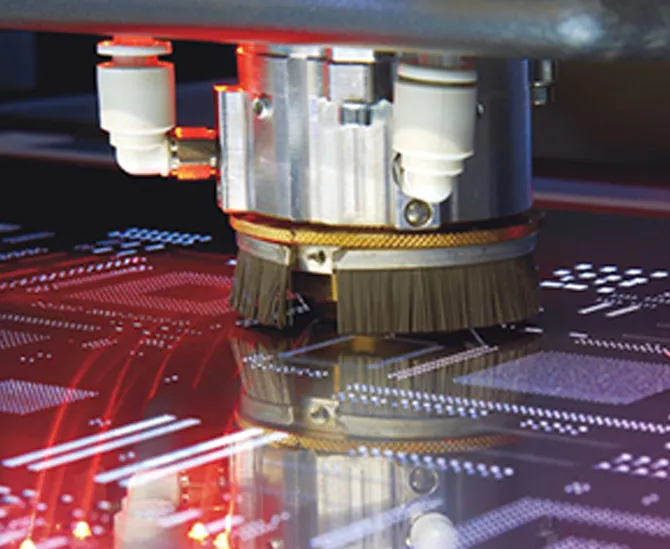
Laser Cutting – High-energy fiber laser systems for smooth, burr-free aperture walls and tight tolerances (±0.01mm).
Electropolishing & Cleaning – Removes debris and improves paste release.
Inspection & Measurement – Automated optical inspection (AOI) and 2D/3D measurement to verify aperture dimensions and alignment.
Packing & Shipping – Ready for same-day or next-day dispatch with protective packaging.
Fully Self-Owned Production – All equipment and processes are internally managed, ensuring no hidden outsourcing and full accountability.
Material Certifications – We use certified stainless steel from trusted suppliers, with material traceability available upon request.
Guaranteed Aperture Accuracy – Critical for fine-pitch components, including 0201, 01005, and uBGA.
Seamless Integration – When you order PCBs and SMT assembly from us, the stencil is perfectly matched to your board design, eliminating alignment risks.
Framed Stencils – Standard aluminum frame for manual or automated printing.
Frameless Stencils – For use with reusable tensioning systems, reducing shipping cost and storage.
Step Stencils – Multiple thickness levels for mixed PCB designs (e.g., fine-pitch and large components).
Nano-Coated Stencils – Enhanced solder paste release for challenging assemblies.
Electroformed Stencils – Available for ultra-fine pitch requirements (upon request).
Q1. What types of SMT stencils do you offer?
We offer laser-cut SMT stencils, including stainless steel stencils, framed stencils, and frameless (prototype) stencils, suitable for both prototype and volume SMT production.
Q2. What stencil thickness options are available?
Common stencil thickness options include 0.08 mm, 0.10 mm, 0.12 mm, and 0.15 mm. The optimal thickness depends on component size, pad design, and solder paste requirements.
Q3. How do you ensure stencil accuracy?
All SMT stencils are manufactured using high-precision laser cutting, followed by electropolishing or nano-coating (optional) to ensure smooth apertures and consistent solder paste release.
Q4. Can you help optimize stencil design?
Yes. Our engineers can assist with aperture modification, step stencils, and stencil optimization to improve solder paste printing quality, especially for fine-pitch and BGA components.
Q5. What files are required to produce an SMT stencil?
To produce an SMT stencil, we typically require Gerber files (paste layer), PCB layout data, or stencil drawings. Our engineering team reviews the data before manufacturing.
Q6. What is the lead time for SMT stencils?
Standard SMT stencil lead time is 1–2 working days, and urgent prototype stencils can often be delivered within 24 hours, depending on design complexity.
Q7. Can SMT stencils be ordered together with PCB assembly?
Yes. SMT stencils can be ordered together with PCB fabrication and assembly, ensuring perfect alignment with the PCB design and reducing setup time during production.
Contact our expert team for personalized assistance. Email us at sales@365pcb.com for project inquiries.
