




Modern PCB projects are becoming increasingly complex — tighter tolerances, higher layer counts, mixed materials, and shorter lead times. Many customers struggle with inconsistent quality, unclear engineering feedback, and delays caused by suppliers who lack real manufacturing depth.
At China 365PCB, we understand these challenges. That’s why we focus on technically demanding PCBs — including HDI, high-layer, impedance-controlled boards, as well as RF, high-TG and mixed-material designs.
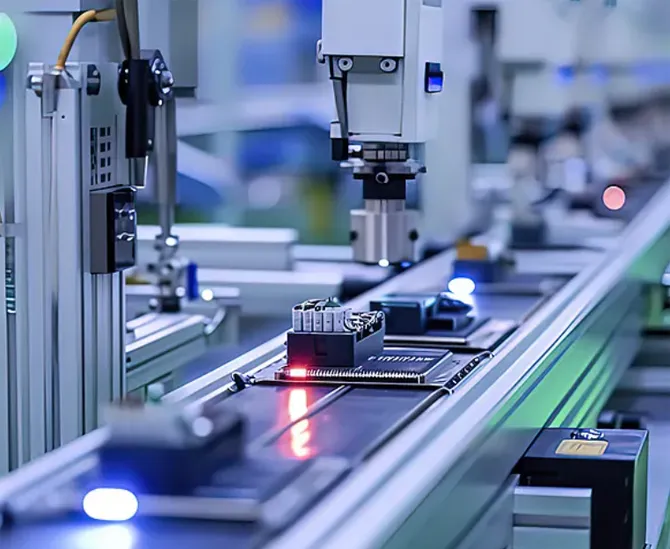
Our in-house engineering team reviews every design for manufacturability, identifies risks early, and communicates clearly before production begins. With strict process control, full inspection, and fast turnaround, we help customers reduce rework, avoid costly delays, and bring complex designs to market with confidence.
China 365PCB is not just a supplier — we are your reliable engineering partner.
Modern PCB designs are increasingly complex, and many issues only appear after production begins — leading to delays, redesigns, and unexpected costs. At China 365PCB, we provide professional DFM guidance at the early stage to help customers avoid these risks.
Our experienced engineers review stack-ups, trace widths, spacing, impedance, materials, drill structures, and tolerances before manufacturing. We identify potential yield, reliability, and assembly issues in advance, and provide clear, actionable feedback to optimize your design for stable mass production.
By addressing manufacturability early, we help reduce design revisions, improve yield, shorten lead times, and ensure your PCB is built right the first time.
Choosing the right PCB type is critical. For cost-effective standard applications, FR-4 is ideal. For high-frequency or high-speed needs, low-loss laminates (Rogers) are essential. Compare HASL (economic) with ENIG (flat, reliable for fine-pitch) for surface finishes. The correct selection balances performance, reliability, and cost for your specific project.
At China 365PCB, many of our projects involve high-complexity designs where standard manufacturers often struggle.
Our case studies highlight PCBs with tight tolerances, advanced stack-ups, and demanding electrical requirements, delivered successfully through strong engineering control.
We have supported projects such as high-layer HDI boards with microvias, impedance-controlled RF PCBs, mixed-material designs combining high-TG and low-loss laminates, and fine-pitch BGA layouts requiring precise registration and assembly alignment.
In these projects, key challenges included signal integrity control, via reliability, thermal management, and strict yield requirements. Through early DFM review, detailed stack-up optimization, controlled drilling and plating processes, and full electrical testing, we helped customers resolve design risks, improve manufacturability, and achieve stable mass production.
These real-world projects demonstrate our capability to handle technically demanding PCB boards, not just simple builds — and why customers trust China 365PCB for their most critical designs.
Q1. What PCB types can you manufacture?
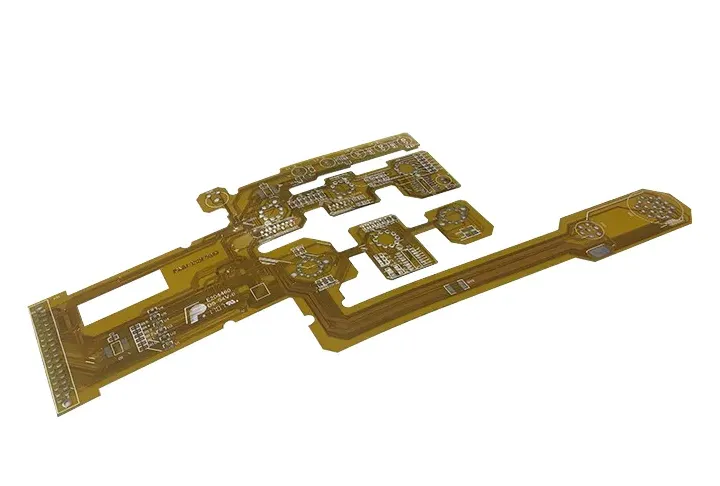
We manufacture a full range of PCB types, including single-layer, double-layer, multilayer PCBs (up to high layer counts), HDI PCBs, rigid-flex PCBs, flexible PCBs, and metal core PCBs. Our manufacturing processes are optimized for both prototype and volume production.
Q2. What files are required to start PCB fabrication?
To begin PCB fabrication, we typically require Gerber files (RS-274X), drill files, and a fabrication drawing. If available, stack-up details and impedance requirements are highly recommended to ensure manufacturing accuracy.
Q3. What is your minimum order quantity (MOQ)?
Our MOQ is very flexible. We support low-quantity prototypes starting from as low as 1 piece, as well as medium and high-volume production.
Q4. What PCB materials and thicknesses do you support?
We support FR-4, high-Tg materials, Rogers, metal core (aluminum/copper), and flexible substrates. Board thickness, copper weight, and surface finish can be customized according to your design requirements.
Q5. How do you ensure PCB quality?
All PCBs undergo electrical testing, AOI inspection, and strict process control. Manufacturing is conducted under a quality system compliant with ISO standards, ensuring reliability and consistency.
Q6. What is the typical lead time for PCB fabrication?
Standard lead time ranges from 3–7 working days, while fast-turn prototypes can be completed in as little as 24–48 hours, depending on complexity.
Contact our expert team for personalized assistance. Email us at sales@365pcb.com for project inquiries.
