The Ultimate Guide: Steps of the Printed Circuit Board Assembly Process Flow Chart
In the fast-paced world of electronics manufacturing, transforming a bare board into a fully functional electronic device requires rigorous discipline, cutting-edge technology, and a flawless execution strategy. For hardware engineers, product managers, and procurement specialists, understanding the exact steps of the Printed circuit board assembly process flow chart is not just an academic exercise; it is a critical requirement for ensuring product reliability, managing production timelines, and controlling costs. When operations deviate from a standardized Printed circuit board assembly process flow chart, the risks of component failure, cold solder joints, and delayed market entry increase exponentially.
At China 365PCB, we are a fully self-operated, full-industry-chain manufacturing group. With over 15 years of industry experience, we operate over 100,000 square meters of production area. Because all our facilities are self-owned and self-managed, we ensure total quality control, full process traceability, and unmatched production flexibility. From our experience, we know that adhering strictly to a validated Printed circuit board assembly process flow chart is the only way to deliver complex, high-reliability electronics. In this authoritative guide, we will walk you through every critical stage of the Printed circuit board assembly process flow chart, offering expert insights to help you optimize your next manufacturing project.
Understanding the Printed Circuit Board Assembly Process Flow Chart
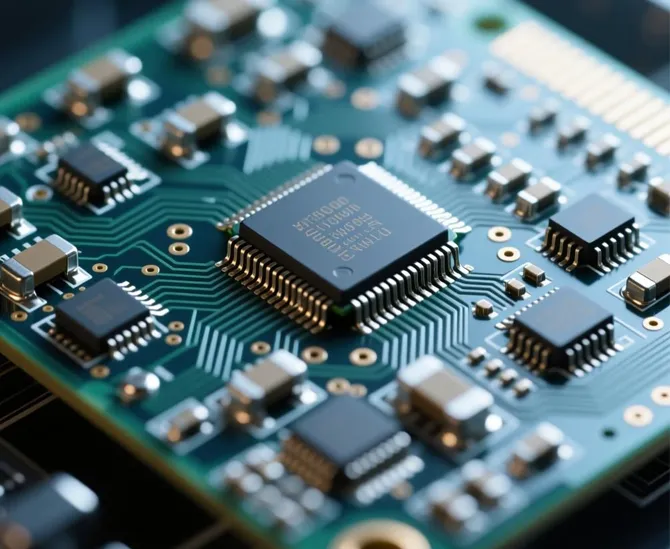
Before diving into the mechanics of the factory floor, it is vital to define what the Printed circuit board assembly process flow chart actually represents. It is a sequential, highly controlled roadmap that dictates how bare printed circuit boards (PCBs) are populated with electronic components to form a functional printed circuit board assembly (PCBA). From our experience, a meticulously documented Printed circuit board assembly process flow chart serves as the foundation for quality assurance. It dictates the transition from surface mount technology (SMT) to through-hole technology (THT), integrates inspection gateways, and defines the thermal profiles required for perfect metallurgical bonding.
We recommend that clients familiarize themselves with this flow chart because it directly impacts design for manufacturability (DFM). When designers understand the physical constraints and chronological steps of the Printed circuit board assembly process flow chart, they can layout components in a way that minimizes machine setup time and reduces soldering defects.
Detailed Steps of the Printed Circuit Board Assembly Process Flow Chart
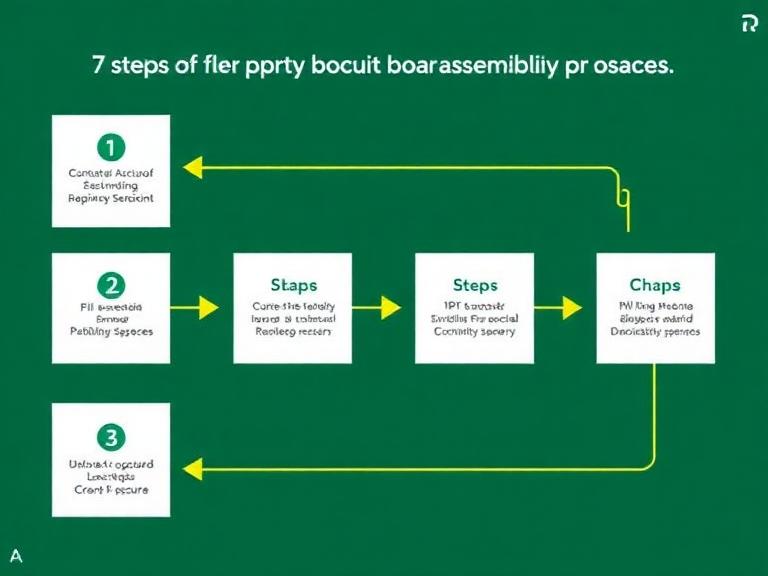
The standard Printed circuit board assembly process flow chart is a masterclass in automated precision. Below is the step-by-step breakdown of how raw materials are transformed into intelligent hardware.
Step 1: Solder Paste Application and Inspection
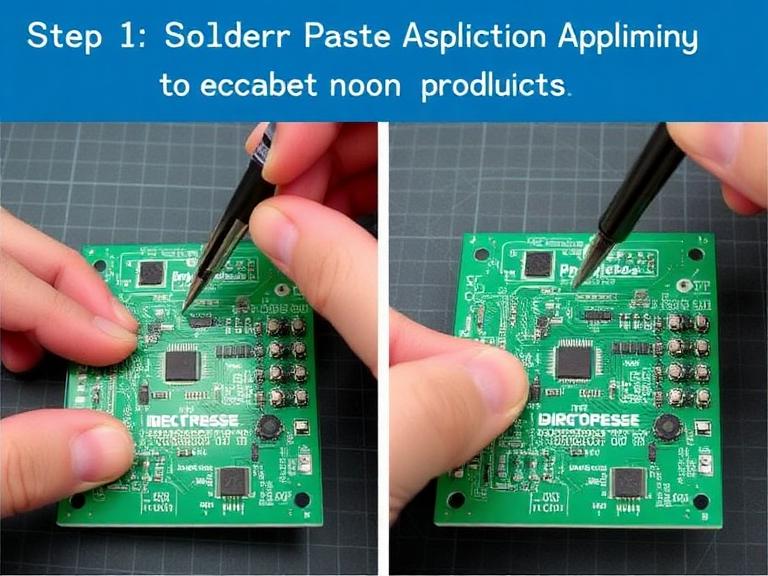
The initiation of the Printed circuit board assembly process flow chart begins with the application of solder paste. A stainless-steel stencil is placed over the bare board, and a squeegee applies a precise amount of solder paste (a mixture of microscopic solder balls and flux) onto the exposed mounting pads. We recommend utilizing 3D Solder Paste Inspection (SPI) immediately after this step. From our experience, up to 70 percent of all soldering defects originate from improper solder paste volume or alignment. SPI machines instantly measure the volume, area, and height of the paste, ensuring flawless preparation for the next stage.
Step 2: Component Pick and Place (SMT)
Once the paste is applied, the board moves to the automated pick-and-place machines. This is the heart of SMT PCB Assembly. High-speed robotic arms, guided by vision systems, pick components from reels or trays and place them onto the solder paste with microscopic accuracy. For modern electronics, this step often involves Fine-pitch Component PCB Assembly and Passive Component PCB Assembly, where components as small as 01005 (imperial) are placed at speeds exceeding tens of thousands of parts per hour. In the Printed circuit board assembly process flow chart, the precision of this stage dictates the reliability of the entire board.
Step 3: Reflow Soldering Profile
The populated board then enters the reflow soldering oven. This is a critical thermal stage in the Printed circuit board assembly process flow chart. The board travels through a series of carefully calibrated temperature zones: preheat, thermal soak, reflow, and cooling. During the reflow zone, the temperature peaks just high enough to melt the solder particles without damaging the sensitive electronic components. We recommend custom thermal profiling for every unique board design, particularly when dealing with Flex & Rigid-Flex PCBA Assembly, as flexible substrates have vastly different thermal mass characteristics compared to standard FR4 boards.
Step 4: Automated Optical Inspection (AOI) and X-Ray
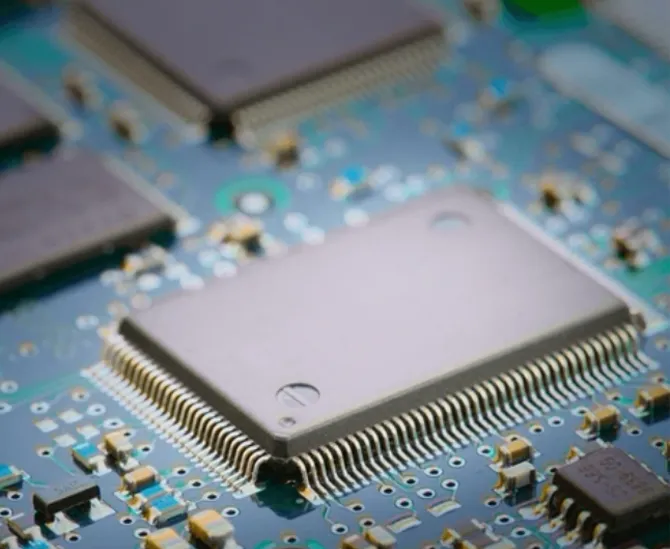
After the board cools and the solder solidifies, it must be rigorously inspected. In a professional Printed circuit board assembly process flow chart, visual inspection is insufficient. We utilize Automated Optical Inspection (AOI) systems that use high-resolution cameras to check for tombstones, solder bridges, and missing components. For projects requiring High-density PCB SMT Assembly, where components like Ball Grid Arrays (BGAs) have hidden solder joints underneath the chip, Automated X-Ray Inspection (AXI) is mandatory. AXI penetrates the component package to verify the structural integrity of every hidden solder sphere.
Step 5: Through-Hole Insertion and Wave Soldering
While SMT dominates modern manufacturing, many power electronics and connectors still require Through-Hole Technology (THT). In this step of the Printed circuit board assembly process flow chart, components with leads are inserted into plated through-holes either manually or via automated insertion machines. The board is then passed over a wave soldering machine, where a cascading wave of molten solder washes over the bottom of the board, adhering to the exposed leads and pads. Selective soldering may also be employed for double-sided boards to protect previously mounted SMT components.
Step 6: Final Inspection and Functional Testing
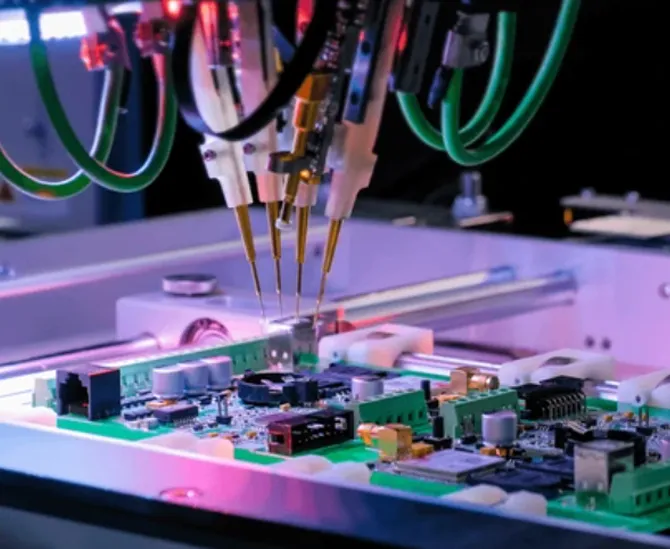
A completed board must prove its operational viability. The testing phase of the Printed circuit board assembly process flow chart includes In-Circuit Testing (ICT), Flying Probe testing, and comprehensive Functional Testing (FCT). From our experience, particularly in Automotive Electronics PCB Assembly, simulating the final operational environment during functional testing is the only way to guarantee zero-defect delivery. We recommend working closely with your manufacturing partner to develop custom test jigs and software protocols.
Step 7: Cleaning and Conformal Coating
The final steps in the Printed circuit board assembly process flow chart involve removing corrosive flux residues through specialized washing systems. Depending on the end-use environment, a conformal coating (a thin polymeric film) may be applied to protect the PCBA from moisture, dust, and chemical extremes. Once coated and cured, the board is ready for final integration, often transitioning directly into Box Build PCB Assembly where the electronics are enclosed in their final casing.
How China 365PCB Elevates the Manufacturing Standard
At China 365PCB, we believe true manufacturing excellence lies in Speed, Precision, and Responsibility. We never outsource, and we never compromise. Many brokers and trading companies claim to manage the Printed circuit board assembly process flow chart, but they rely on fractured, third-party supply chains. From PCB fabrication to complete OEM integration, every board, every circuit, and every connection is made within our own self-managed facilities.
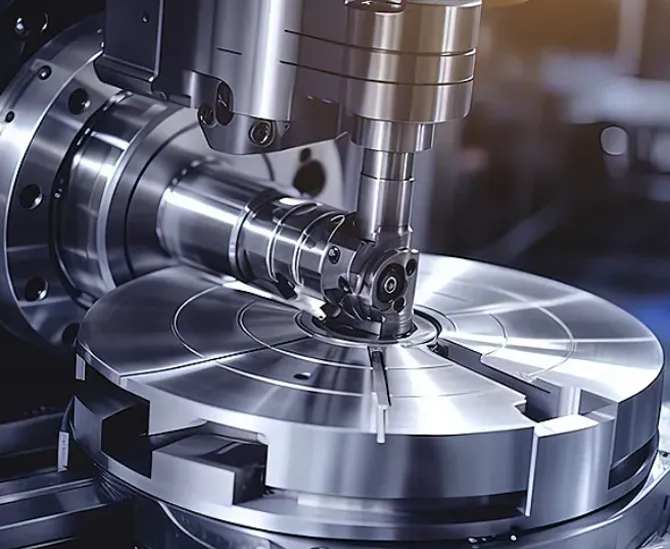
Whether you require a rapid Prototype PCB Assembly to validate a new design or high-volume mass production, our one-stop turnkey service guarantees no delays and no excuses. By vertically integrating the entire Printed circuit board assembly process flow chart—including online electronic component sourcing, CNC machining, and cable harness assembly—we ensure you always get faster delivery, higher quality, and absolute reliability. This is how we truly realize 365 days of fast manufacturing for our global customers.
Summary Table: Printed Circuit Board Assembly Process Flow Chart Stages
To assist your engineering and procurement teams, we have summarized the critical gateways of the Printed circuit board assembly process flow chart below.
| Process Stage | Primary Action | Quality Control Mechanism | Key Equipment Used |
|---|
| Solder Paste Printing | Applying solder paste to bare PCB pads. | 3D Solder Paste Inspection (SPI) | Automated Stencil Printer |
| Pick and Place (SMT) | Mounting surface-mount components. | Machine Vision Alignment | High-Speed SMT Mounter |
| Reflow Soldering | Melting paste to form metallurgical bonds. | Thermal Profiling | Multi-zone Reflow Oven |
| SMT Inspection | Verifying solder joint integrity and placement. | AOI and 3D X-Ray (AXI) | AOI Machine, X-Ray System |
| Through-Hole Soldering | Soldering leaded components. | Visual Inspection, Post-Wave AOI | Wave / Selective Soldering Machine |
| Testing & Integration | Verifying electrical functionality. | ICT, Flying Probe, Functional Testing | Custom Test Jigs, Multimeters |
Expert Recommendations for Your PCBA Project
From our experience managing thousands of complex builds at China 365PCB, we recommend engaging with your manufacturing partner during the initial design phase. A well-optimized Printed circuit board assembly process flow chart begins with solid Design for Manufacturability (DFM) principles. Ensure your component footprints match your BOM exactly, balance the thermal mass across your board to prevent warping during reflow, and define clear testing parameters before the first prototype is ever assembled. By aligning your design with a professional Printed circuit board assembly process flow chart, you eliminate costly revisions and accelerate your time to market.
Frequently Asked Questions (FAQs)
Why is the Printed circuit board assembly process flow chart important for OEMs?
The Printed circuit board assembly process flow chart establishes a standardized, repeatable manufacturing roadmap. It allows OEMs to trace production bottlenecks, ensure quality control gateways (like SPI and AOI) are met, and guarantees that the final product adheres to strict reliability standards.
What is the difference between SMT and THT in the assembly flow chart?
Surface Mount Technology (SMT) involves placing components directly onto the surface of the board using solder paste and reflow ovens. Through-Hole Technology (THT) requires inserting component leads through drilled holes in the board and using wave soldering. Both are distinct, sequential steps within the comprehensive Printed circuit board assembly process flow chart.
How does China 365PCB ensure quality during the assembly process?
Because we never outsource, we maintain absolute control over the entire Printed circuit board assembly process flow chart. Our 100,000 square meter self-operated facility utilizes inline 3D SPI, advanced AOI, X-Ray inspection for BGAs, and comprehensive functional testing to ensure every board meets our rigorous quality metrics.
Can the Printed circuit board assembly process flow chart be adjusted for prototypes?
Yes. While the core physical principles of soldering remain the same, the Printed circuit board assembly process flow chart for a
Prototype PCB Assembly may incorporate more manual verification steps, flying probe testing instead of custom ICT fixtures, and rapid tooling adjustments to accommodate design iterations quickly.
References
 English