Why PCB Panelization Is a Manufacturing Decision, Not a Layout Afterthought
From a manufacturing standpoint, PCB panelization is not simply arranging boards to save space.
It directly affects:
· Fabrication yield
· Assembly stability
· Process repeatability
· Unit cost
· Delivery lead time
Many PCB projects fail to meet cost or yield targets not because the PCB design is wrong,
but because panelization was decided too late or without manufacturing input.
A good PCB design can still fail in production if panelization is poorly engineered.
How Manufacturing Defines PCB Panelization
In PCB board manufacturing, panelization means:
· Combining multiple PCB units into a single manufacturing panel
· Designing breakaway features (tabs, V-cuts, routing)
· Ensuring mechanical stability through fabrication and assembly
· Aligning panel dimensions with process equipment limits
Panelization is a process engineering task, not a cosmetic or purely CAD activity.
Panelization in Fabrication vs Panelization in Assembly
3.1 Fabrication-Oriented Panelization
Fabrication focuses on:
· Panel size optimization for etching and lamination
· Uniform copper distribution
· Drill and plating balance
· Minimizing scrap
Poor fabrication panelization causes:
· Etching non-uniformity
· Lamination stress
· Yield variation across the panel
3.2 Assembly-Oriented Panelization
SMT assembly focuses on:
· Panel rigidity during reflow
· Conveyor compatibility
· Fiducial placement
· Component clearance
A panel optimized for fabrication but not assembly will fail later in the process.
Effective panelization must satisfy both fabrication and assembly constraints.
Standard Panel Sizes and Manufacturing Constraints
PCB manufacturers design panelization around standard working panel sizes, such as:
· 18" × 24"
· 21" × 24"
· Metric equivalents depending on equipment
Panels that deviate significantly from standard sizes:
· Increase setup time
· Reduce throughput
· Increase cost
Panel size optimization is a key cost lever in PCB manufacturing.
Copper Balance and Its Impact on Panel Yield
Uneven copper distribution across a panel causes:
· Etching rate variation
· Warpage during lamination
· Plating thickness imbalance
From manufacturing experience:
Copper imbalance is one of the most common hidden yield killers in panelized designs.
Proper panelization includes:
· Copper thieving patterns
· Symmetrical layout
· Balanced ground plane distribution
Mechanical Stability During Fabrication
6.1 Thin Boards and Large Panels
Thin PCBs panelized in large formats are prone to:
· Bending during handling
· Misregistration
· Drill accuracy loss
Panel breakage or distortion leads to scrap before assembly even begins.
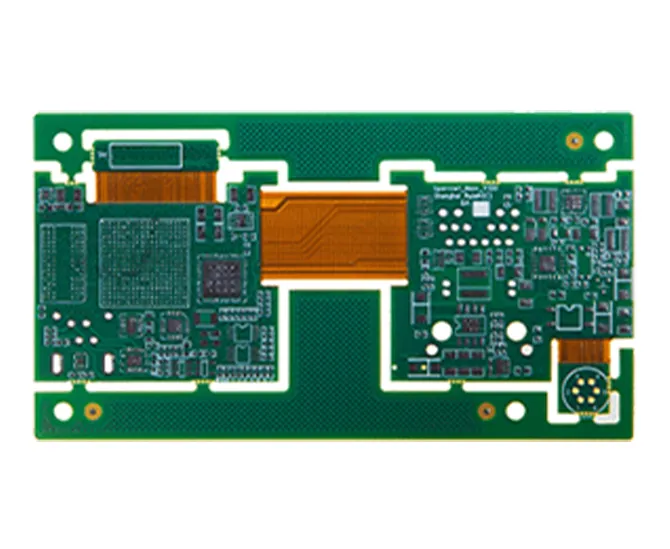
6.2 Rigid-Flex and Heavy Copper Panel Risks
Rigid-flex and heavy copper boards introduce additional challenges:
· Local stiffness variation
· Stress concentration
· Handling sensitivity
Panelization must be adjusted specifically for these technologies.
Panelization Methods: Manufacturing Trade-Offs
7.1 V-Score (V-Cut) Panelization
Manufacturing advantages:
· Clean, straight separation
· Low cost
· Fast processing
Limitations:
· Only suitable for straight edges
· Reduces panel strength
· Not suitable for irregular shapes
7.2 Tab Routing with Mouse Bites
Manufacturing advantages:
· Flexible board shapes
· Better panel rigidity
Risks include:
· Burr formation
· Stress at breakaway points
· Additional routing cost
Mouse bite design quality directly affects assembly yield.
7.3 Full Routing with Carrier Rails
Used for:
· Small or irregular boards
· Thin or flexible PCBs
Carrier rails add cost but:
· Improve SMT stability
· Reduce handling damage
Manufacturing often favors rails for high-risk designs.
Fiducials, Tooling Holes, and Process Alignment
Panel-level features are critical for:
· SMT alignment
· AOI accuracy
· Test fixture registration
Common panelization errors include:
· Missing global fiducials
· Poor fiducial contrast
· Inadequate tooling hole placement
These errors cause assembly defects that are hard to diagnose later.
Learn more about PCB Assembly: Prototype PCB Assembly from a PCBA Engineering Perspective Engineering Validation, Process Learning, and Risk Exposure in Early-Stage Assembly
Panelization and Reflow Thermal Behavior
Panel layout affects:
· Heat distribution
· Reflow uniformity
· Component tombstoning risk
Uneven thermal mass across a panel causes:
· Cold solder joints
· Voiding
· Warpage during reflow
Thermal balance must be considered at the panel level, not just the board level.
Further reading: Thermal Management in PCB Design Heat Flow Fundamentals, Failure Mechanisms, and Manufacturing-Aware Reliability Engineering
Yield Loss Patterns Linked to Poor Panelization
Manufacturing data shows that poor panelization leads to:
· Higher defect density at panel edges
· Increased breakage during depanelization
· Assembly misalignment
· Inconsistent solder joints
Because these defects appear late, scrap cost is high.
Depanelization: Where Good Panels Still Fail
Depanelization introduces mechanical stress.
Common risks include:
· Cracked solder joints
· Component damage
· Micro-cracks in vias
Designs that ignore depanelization forces often fail after assembly, not before.
Manufacturing must align panel breakaway strategy with component placement.
Cost Impact of Panelization Decisions
Panelization directly affects cost through:
· Material utilization
· Throughput
· Setup time
· Yield
A poorly optimized panel can increase unit cost by 10–30%, even with the same PCB design.
Panel optimization is one of the highest ROI improvements in manufacturing.
Scaling from Prototype Panels to Volume Production
Prototype panelization often differs from production panelization.
Risks during scaling include:
· Panel size changes
· Breakaway method changes
· Assembly line differences
Successful scaling requires:
· Production-intent panelization from early stages
· Validation on real SMT lines
· Yield monitoring by panel region
DFM for PCB Panelization (Manufacturing View)
Effective DFM considers:
· Equipment limits
· Process flow
· Assembly handling
· Depanelization stress
A board that is “fabrication-ready” may still be panelization-unfriendly.
How China 365PCB Engineers Panelization for Yield and Stability
As a leading OEM PCB manufacturer, China 365PCB treats panelization as a core manufacturing engineering task.
We provide:
· Fabrication + assembly co-optimized panel design
· Copper balance analysis
· Panel rigidity and stress evaluation
· Yield-driven panel layout optimization
Our goal is stable mass production, not just fitting boards onto a panel.
Final Thoughts: Panelization Is Where Manufacturing Efficiency Is Won or Lost
PCB panelization is not about fitting more boards on a sheet.
It is about:
· Process stability
· Assembly success
· Yield consistency
· Cost control
Good panelization makes manufacturing predictable.
Poor panelization makes every process unpredictable.
Manufacturing-Focused CTA
If your PCB must scale smoothly through fabrication and SMT assembly, early panelization review is essential.
Our engineering team can evaluate panel layout, breakaway strategy, and yield risks before production begins.
David Li
David Li is the Technical Communications Director at China 365PCB, with over 15 years of hands-on experience in the PCB and electronics manufacturing industry. Holding a Master’s degree in Electrical Engineering, he has worked extensively in both R&D and manufacturing roles at leading multinational electronics firms in Shenzhen before joining our team.
His expertise spans high-speed digital design, advanced packaging (HDI, Flex), and automotive-grade reliability standards. David is passionate about bridging the gap between design intent and production reality—a philosophy that aligns perfectly with 365PCB’s mission to deliver seamless, rapid, and fully-integrated manufacturing solutions.
Follow David’s insights on PCB technology trends and best practices here on the 365PCB Knowledge Hub.
 English